

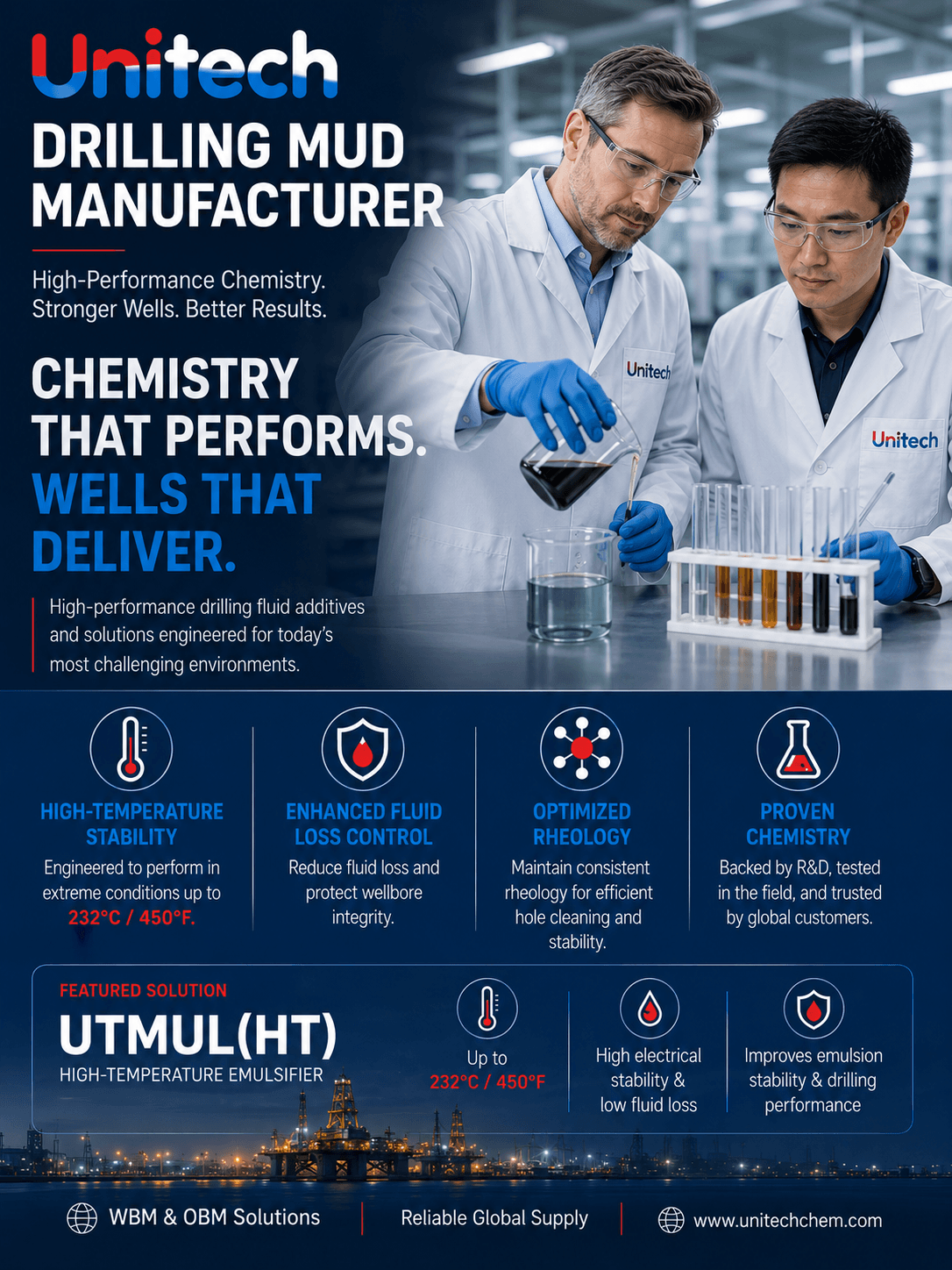
As global drilling activity expands into deeper reservoirs, unconventional resources, and increasingly complex geological formations, drilling fluid performance has become more critical than ever.
Operators today face a wide range of technical challenges, including:
· High-temperature and high-pressure (HTHP) wells
· Reactive shale formations
· High-salinity environments
· Extended-reach and horizontal wells
· High-density drilling fluid systems
· Environmentally sensitive drilling projects
Under these conditions, drilling fluid additives must do more than meet laboratory specifications. They must deliver consistent performance, stable quality, operational reliability, and compatibility with demanding drilling programs.
The right solution is rarely a single additive. Challenging drilling environments typically require an integrated fluid system in which filtration control, rheology, inhibition, lubrication, suspension, and thermal stability are addressed together.
At Unitech Chemicals, we support drilling fluid manufacturers, service companies, and operators worldwide with a broad portfolio of drilling fluid additives designed for challenging drilling environments. Our focus is on helping customers improve wellbore stability, fluid performance, operational efficiency, and long-term drilling reliability.
Every drilling environment presents unique technical requirements. As wells become deeper and more complex, drilling fluids must perform multiple functions simultaneously.
These functions include:
· Maintaining wellbore stability
· Controlling filtration and fluid loss
· Suspending weighting materials and cuttings
· Inhibiting shale hydration
· Maintaining rheological stability
· Supporting high-temperature performance
· Minimizing environmental impact
Failure in any of these areas can lead to:
· Wellbore instability
· Lost circulation
· Stuck pipe incidents
· Barite sag
· Excessive non-productive time (NPT)
· Increased drilling costs
For this reason, additive selection has become a critical component of drilling fluid design.
Drilling Challenge | Key Fluid Requirement | Typical Additive Solutions |
High temperature | Thermal stability, filtration control | High-temperature starch, thermally stable PAC, high-temperature polymers |
High salinity / CaCl₂ | Salt and calcium tolerance | Salt-resistant PAC, calcium & salt-resistant starch, xanthan gum |
Reactive shale | Inhibition, encapsulation | PHPA, polyamines, KCl, methyl glucoside |
High-density mud | Suspension, sag control | Xanthan gum, rheology modifiers, organophilic clay |
Horizontal drilling | Hole cleaning, lubrication | Xanthan gum, lubricants, PAC |
Fluid loss | Filter cake quality | PAC, CMC, modified starch |
OBM high temperature | Emulsion and rheology stability | High-temperature emulsifiers, stabilizers, organophilic clay |
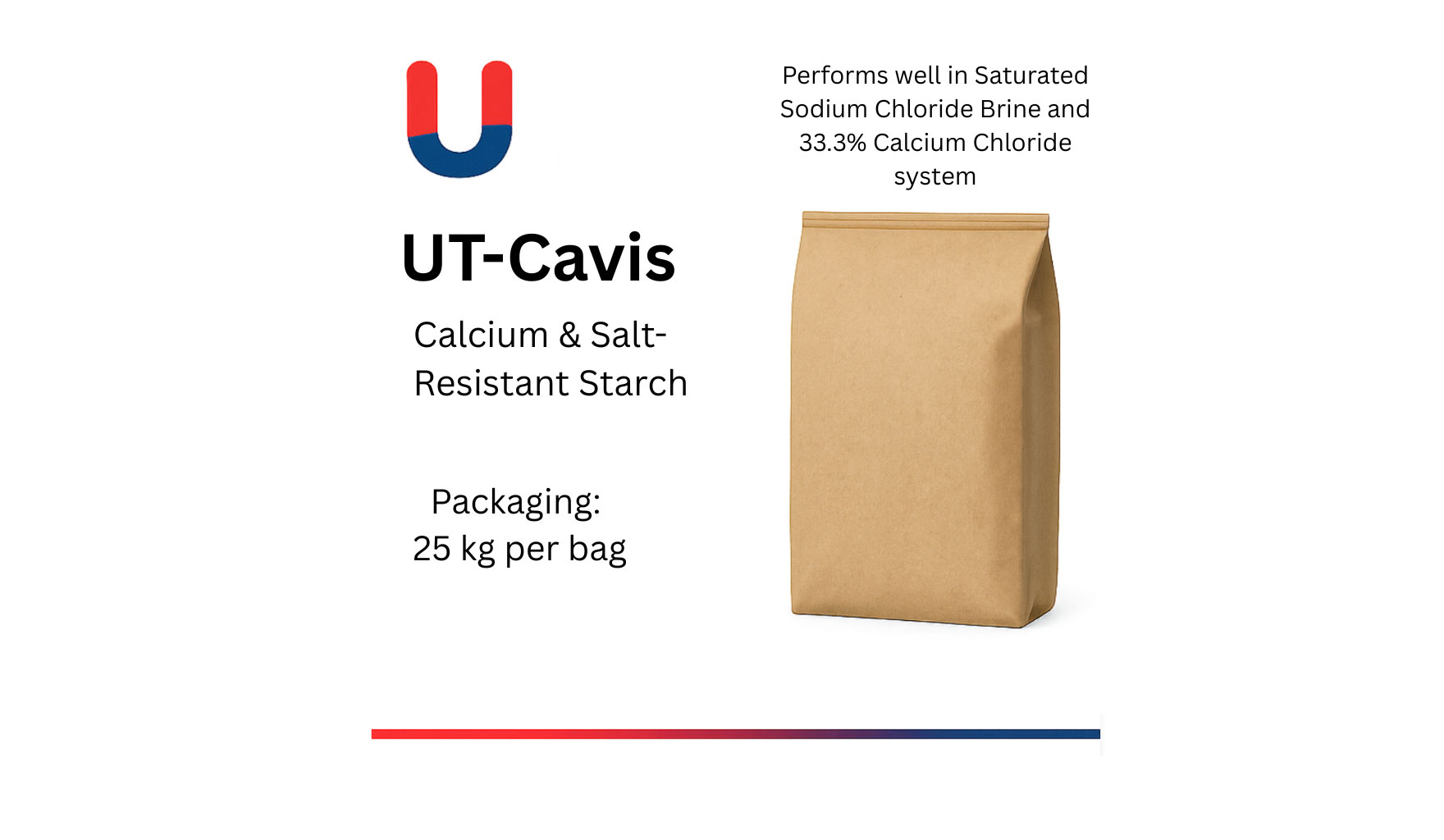
Calcium & Salt-Resistant Starch
Fluid invasion into permeable formations remains one of the most common drilling fluid performance issues.
Under high-temperature and high-salinity conditions, conventional fluid loss control additives may experience:
· Thermal degradation
· Reduced effectiveness
· Poor filter cake quality
· Increased formation damage risk
Effective filtration control requires additives capable of maintaining performance under demanding downhole conditions.
Key objectives include:
· Reducing HTHP fluid loss
· Improving filter cake integrity
· Minimizing formation damage
· Maintaining long-term fluid stability
Proper fluid loss control can help:
· Improve wellbore stability
· Protect productive formations
· Reduce drilling risks
· Support consistent drilling performance
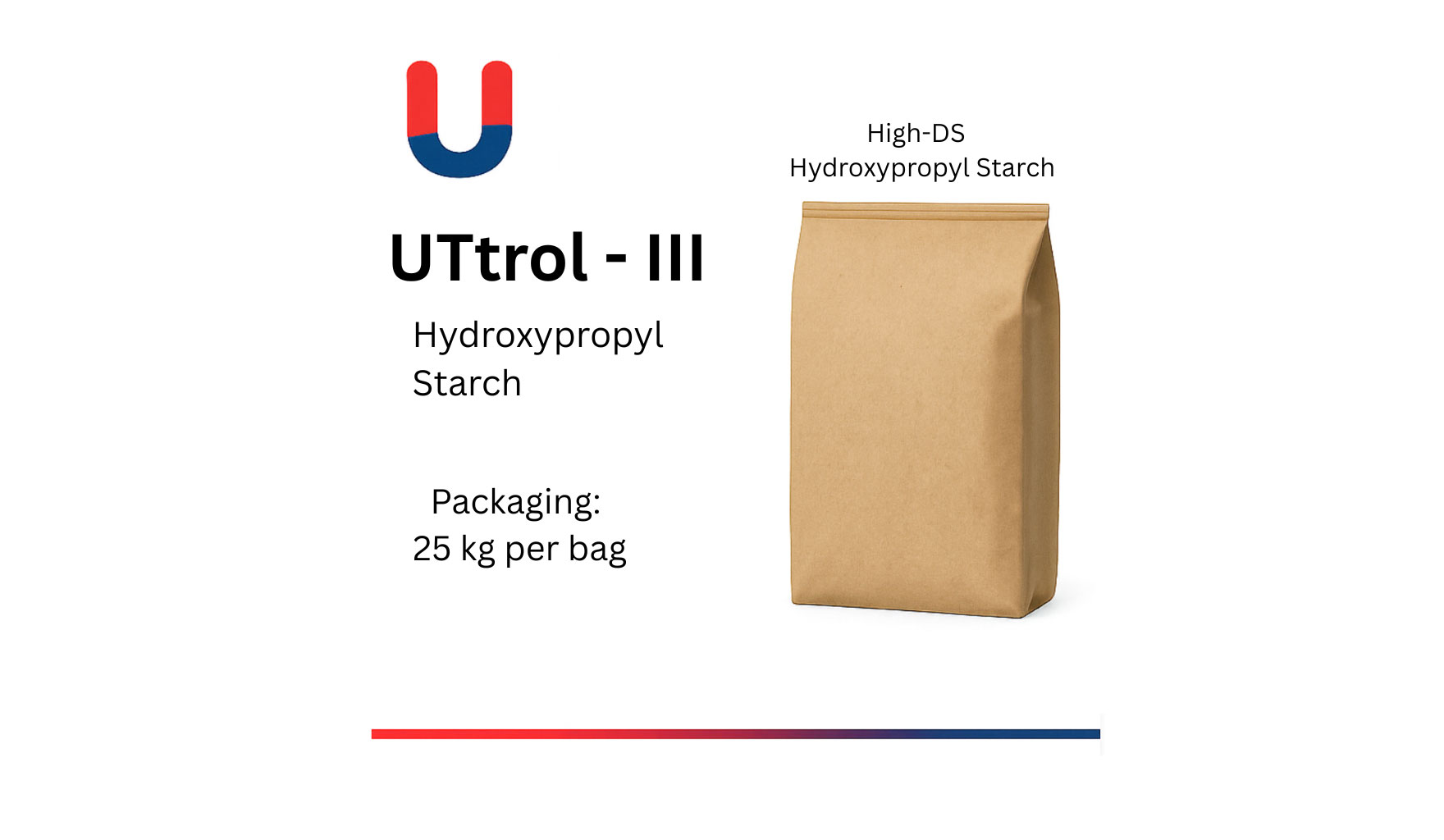
For water-based drilling fluids, Unitech Chemicals offers modified starches, including hydroxypropyl starch, non-ionic crosslinked starch, calcium & salt-resistant starch, and high-temperature resistant starch for different filtration-control requirements. For oil-based mud systems, organic lignite products and other fluid loss control additives can be selected according to the base oil, temperature, and formulation requirements.
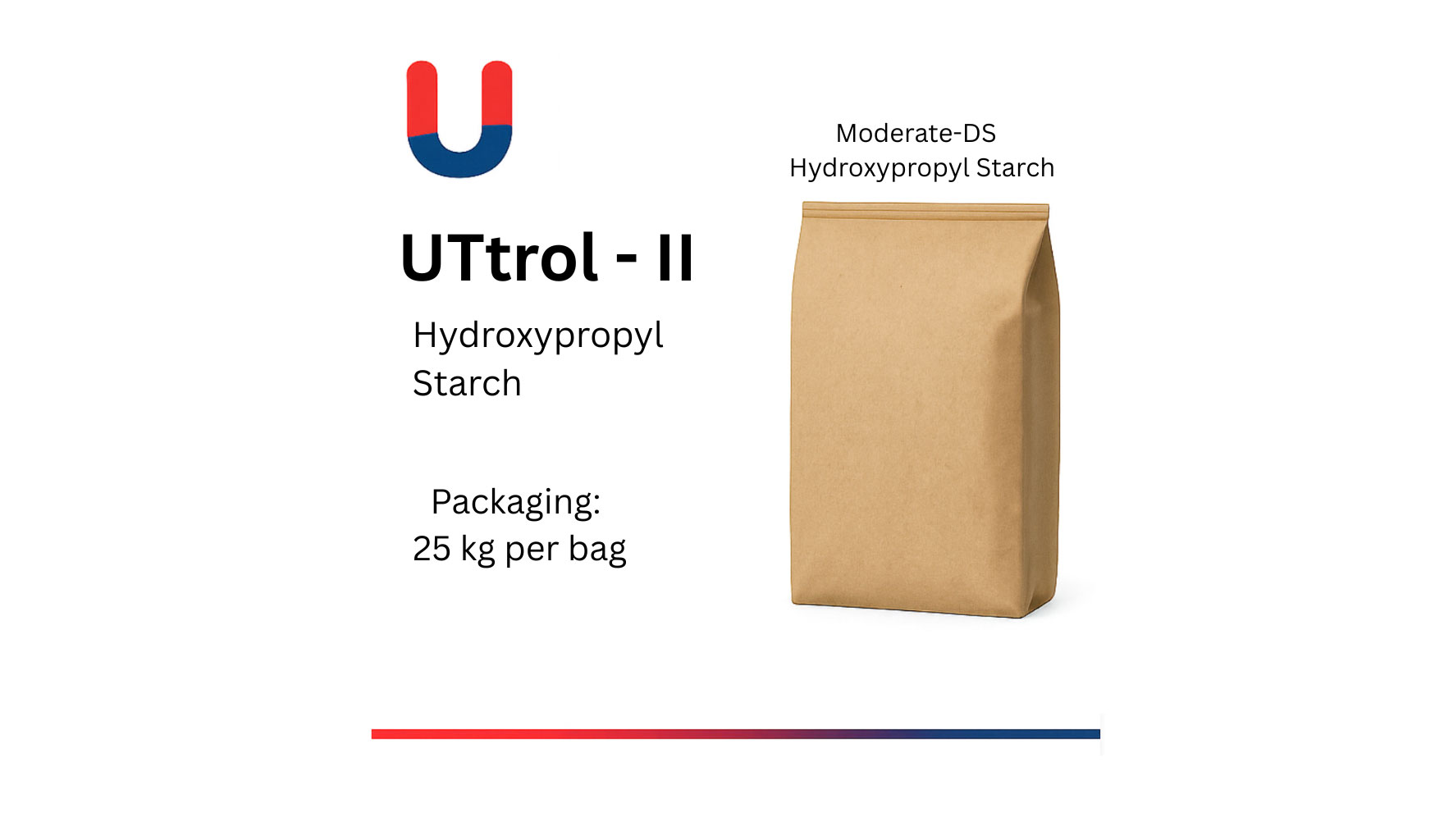
high degree of substitution (DS) hydroxypropyl starch
Reactive shale formations represent one of the most significant causes of drilling complications worldwide.
When shale absorbs water, it may:
· Swell
· Disperse
· Slough into the wellbore
· Cause hole enlargement
· Lead to stuck pipe incidents
Successful shale inhibition requires controlling the interaction between drilling fluids and clay-rich formations.
Key objectives include:
· Reducing shale hydration
· Minimizing clay swelling
· Improving borehole stability
· Maintaining drilling efficiency
Effective shale inhibition can provide:
· Improved wellbore integrity
· Reduced instability events
· Better hole cleaning efficiency
· Lower overall drilling costs
Depending on formation reactivity and fluid system requirements, shale inhibition programs may combine PHPA, polyamine inhibitors, KCl, methyl glucoside, and other compatible additives. The appropriate combination depends on clay mineralogy, salinity, temperature, and environmental requirements.
Unitech Chemicals provides inhibition-focused additives for water-based drilling fluid systems, including methyl glucoside and other polymer-based and specialty solutions.
Maintaining proper rheology is essential for transporting cuttings and supporting efficient drilling operations.
Poor rheological performance can result in:
· Inadequate cuttings transport
· Increased equivalent circulating density (ECD)
· Poor suspension performance
· Reduced drilling efficiency
An optimized rheology profile must balance:
· Plastic viscosity
· Yield point
· Gel strengths
· Low-shear-rate viscosity
Improved rheology control can contribute to:
· Enhanced hole cleaning
· Better suspension performance
· Improved drilling efficiency
· Reduced operational risks
Depending on the drilling fluid system, rheology control may involve xanthan gum, PAC, organophilic clay, high-temperature stabilizers, and other rheology modifiers. Unitech Chemicals offers rheology-related additives for both water-based and oil-based mud systems.
As mud density increases, maintaining stable suspension of weighting materials becomes increasingly difficult.
Common issues include:
· Barite sag
· Settling of weighting materials
· Density variations
· Well control concerns
Effective suspension performance requires a combination of:
· Proper rheology design
· Optimized solids management
· Appropriate wetting and dispersion technologies
The formulation must balance low-shear-rate viscosity, gel strength, electrical stability in OBM systems, and equivalent circulating density (ECD) rather than simply maximizing viscosity.
Improved suspension performance helps:
· Maintain consistent mud density
· Reduce sag-related risks
· Improve drilling safety
· Support stable drilling operations
Our additive portfolio includes products designed to improve suspension performance in both water-based and oil-based drilling fluid systems.
High-temperature wells place significant stress on drilling fluid systems.
Under elevated temperatures, drilling fluids may experience:
· Polymer degradation
· Rheology loss
· Increased fluid loss
· Emulsion instability
· Reduced suspension performance
Thermally stable drilling fluid systems require careful additive selection and formulation design.
Important considerations include:
· Thermal resistance
· Long-term aging stability
· Compatibility between additives
· HTHP performance retention
High-temperature stability contributes to:
· Improved drilling reliability
· Reduced treatment frequency
· Longer fluid life
· Enhanced operational efficiency
For high-temperature water-based mud systems, Unitech Chemicals offers CMS-HT, a high-temperature resistant starch designed for filtration control under elevated-temperature conditions. For oil-based mud systems, high-temperature emulsifiers, stabilizers, organophilic clays, and organic lignite products can be selected according to system requirements.
high-temperature resistant starch
Different drilling programs require different fluid systems.
Advantages include:
· Lower environmental impact
· Simplified disposal
· Cost-effective performance
Applications:
· Conventional wells
· Environmentally sensitive regions
· Shallow to medium-depth drilling programs
Advantages include:
· Excellent shale inhibition
· Superior thermal stability
· Enhanced lubricity
Applications:
· Deep wells
· Extended-reach wells
· High-temperature drilling environments
Unitech Chemicals supports both WBM and OBM formulations through a broad range of drilling fluid additives and technical expertise.
Challenge | WBM Approach | OBM Approach |
Fluid loss | PAC, modified starch | Organic lignite and fluid loss additives |
Shale inhibition | PHPA, polyamine, KCl | Oil-phase formulation and emulsification |
Rheology | Xanthan gum, PAC | Organophilic clay |
High temperature | Thermally stable polymers/starch | High-temperature emulsifiers/stabilizers |
Lubricity | Water-based lubricants | Naturally high lubricity of OBM + specialty additives |
Environmental performance has become an increasingly important consideration across global drilling operations.
Operators today are seeking additives that help achieve both technical and environmental objectives.
· Environmentally friendly drilling additives
· Sustainable drilling fluid technologies
· Reduced environmental impact
· Improved operational efficiency
· Support for responsible drilling practices
Particular attention is being directed toward:
· Hydroxypropyl modified starch
· Low-toxicity additives
· High-performance water-based systems
· Sustainable drilling fluid formulations
Our product development efforts continue to focus on balancing performance, reliability, and environmental responsibility.
Consistent drilling fluid performance begins with consistent manufacturing quality.
At Unitech Chemicals, quality assurance extends throughout the production process.
· Stable production processes
· Controlled raw material sourcing
· Process monitoring
· Batch traceability
Our quality management approach emphasizes:
· Incoming raw material inspection
· In-process quality monitoring
· Finished product testing
· Batch-to-batch consistency verification
Technical evaluation capabilities may include:
· Rheological testing
· Filtration testing
· Compatibility assessments
· Product performance evaluation
This commitment to quality helps ensure reliable product performance across a wide range of drilling applications.
The drilling industry increasingly operates on a global scale.
Customers require suppliers capable of providing:
· Consistent quality
· Reliable delivery
· Technical responsiveness
· Long-term partnership support
Unitech Chemicals supports customers across international markets with a focus on:
· Stable supply capability
· Export-oriented operations
· Technical collaboration
· Application-focused support
Our experience spans a variety of drilling conditions, including:
· High-temperature environments
· Reactive shale formations
· High-salinity systems
· Complex well architectures
Customers increasingly seek suppliers that offer more than products alone.
Key areas of focus include:
· Technical expertise
· Product consistency
· Reliable manufacturing
· Sustainable development commitment
· International supply capability
· Long-term cooperation
By combining product quality, technical support, and manufacturing reliability, we help customers address the challenges of modern drilling operations with confidence.

Modern drilling environments demand drilling fluid additives capable of performing under increasingly complex conditions.
Whether the challenge involves fluid loss control, shale inhibition, rheology optimization, suspension stability, or high-temperature performance, success depends on selecting reliable additives backed by strong technical support and consistent manufacturing quality.
Unitech Chemicals remains committed to delivering drilling fluid solutions that support operational performance, environmental responsibility, and long-term customer success across global drilling markets.
If you are evaluating drilling fluid additives for:
· High-temperature wells
· Reactive shale formations
· High-density drilling fluids
· Water-based or oil-based systems
· Environmentally sensitive drilling projects
Our technical team can assist with:
· Product selection recommendations
· Formulation optimization
· Performance evaluation
· Technical documentation
· Application support