

Rheology modifiers and viscosifiers are related but are not exactly the same. A viscosifier is primarily used to build or increase viscosity and gel structure, while a rheology modifier is generally selected to adjust the overall flow behavior of a drilling fluid, including low-shear-rate viscosity (LSRV), yield point (YP), gel strength, and shear-thinning behavior.
The distinction is functional rather than absolute. Some additives can perform both roles depending on the drilling-fluid formulation and treatment concentration.
Property | Viscosifier | Rheology Modifier |
Primary purpose | Build or increase viscosity and structure | Optimize the rheological profile |
Typical targets | Viscosity, gel strength, suspension | LSRV, YP, gel strength, shear-thinning behavior |
PV impact | May increase significantly depending on chemistry and dosage | Can be relatively limited depending on product and formulation |
LSRV | Can increase | Often an important target |
YP | Can increase | Often an important optimization target |
Gel strength | Commonly contributes to gel structure | Can adjust gel behavior |
Suspension | Improves | Improves |
Typical OBM example | Organophilic clay | Polymeric rheology modifier |
Representative Unitech product | UT-gel(HT) | UTMOD |
In practical drilling-fluid design, the choice should be based on the rheological problem that needs to be solved rather than simply on the additive's name.
A viscosifier is a drilling-fluid additive used primarily to increase the fluid's viscosity and develop sufficient rheological structure for effective solids suspension and cuttings transport.
A drilling fluid must remain sufficiently structured to suspend weighting materials and drilled cuttings when circulation stops, while also flowing efficiently when circulation resumes. Viscosifiers help establish this structure.
· Increasing apparent and/or plastic viscosity
· Developing gel structure
· Improving static suspension
· Supporting cuttings transport
· Improving hole-cleaning performance
· Maintaining suspension of weighting materials
· Contributing to the desired rheological profile
However, more viscosity is not necessarily better.
Excessive viscosity can increase circulating pressure, pressure losses, and potentially equivalent circulating density (ECD). It can also increase the energy required to circulate the drilling fluid.
Therefore, a viscosifier should be selected and treated according to the required rheological profile rather than simply to maximize viscosity.
In oil-based mud (OBM), organophilic clay, also known as organoclay, is a common viscosifying material.
Organoclay develops a three-dimensional structure within the oil-based system and contributes to:
· Viscosity development
· Gel strength
· Suspension
· Cuttings carrying capacity
· Hole cleaning
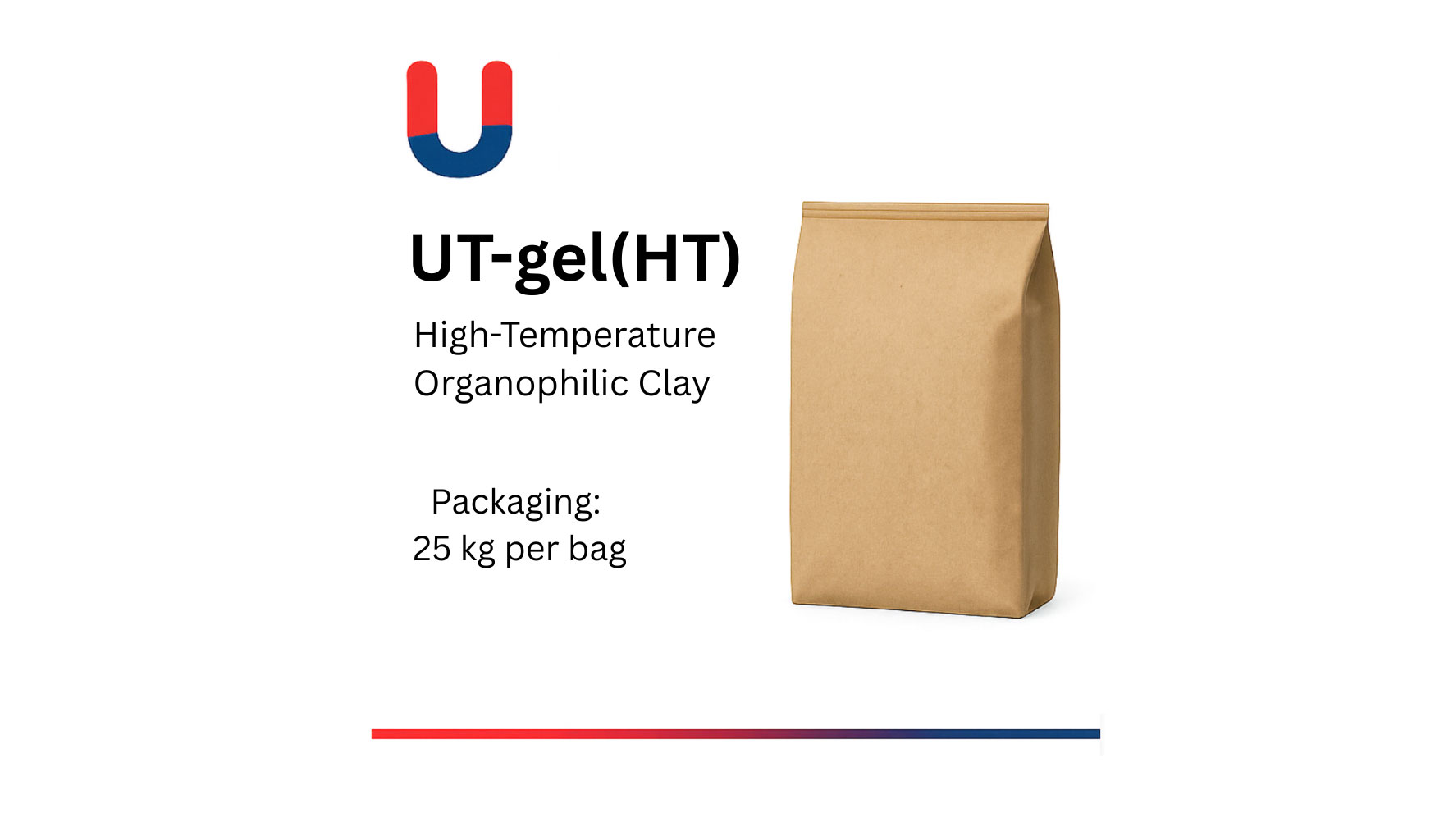
For example, UT-gel(HT) is a high-temperature organophilic clay designed primarily as a viscosifier for oil-based drilling fluids.
It can provide the required rheological properties while supporting suspension and cuttings transport in diesel-based, white-oil-based, and synthetic-based systems.
At high temperatures, the performance of the complete mud system must be considered because emulsifiers, wetting agents, fluid-loss additives, and other components also influence rheological stability.
A rheology modifier is an additive designed to modify or optimize the flow behavior of a drilling fluid under different shear conditions.
Unlike a conventional viscosifier, whose primary objective is to build viscosity and structure, a rheology modifier may be selected to achieve a more specific combination of:
· Low-shear-rate viscosity
· Yield point
· Plastic viscosity
· Gel strength
· Shear-thinning behavior
· Suspension characteristics
· Cuttings transport
This distinction is particularly important when the drilling fluid already has adequate overall viscosity but does not have the desired rheological profile.
For example, a drilling fluid may have acceptable viscosity but insufficient LSRV and YP. Simply adding more viscosifier could increase PV excessively without providing the desired rheological balance.
In such cases, a targeted rheology modifier may be a more appropriate approach.
Low-shear-rate viscosity (LSRV) describes the behavior of a drilling fluid under relatively low shear conditions.
LSRV is important for applications where the drilling fluid must maintain suspension and transport solids effectively under low-shear conditions, particularly in annular flow and during changes in circulation conditions.
A rheology modifier designed to increase LSRV can therefore help improve:
· Static and dynamic suspension
· Cuttings transport
· Hole cleaning
· Low-shear flow behavior
However, LSRV should not be considered independently. It needs to be evaluated together with PV, YP, gel strength, solids concentration, and the overall drilling-fluid formulation.
The difference between a viscosifier and a rheology modifier becomes clearer when the major rheological parameters are considered.
Rheological Property | Viscosifier | Rheology Modifier |
PV | Often contributes to overall viscosity increase | May have a relatively limited effect depending on chemistry |
YP | Can increase | Frequently a target for optimization |
LSRV | Can increase | Often specifically targeted |
Gel strength | Commonly builds gel structure | Can modify or optimize gel behavior |
Shear-thinning | Depends on additive chemistry | Often an important performance objective |
Suspension | Improves | Can improve |
Hole cleaning | Supports | Supports |
Main objective | Build viscosity and structure | Achieve a desired rheological profile |
Plastic viscosity (PV) is associated primarily with the flow resistance of the drilling fluid and is influenced by factors including the liquid phase, polymer concentration, and solids loading.
A significant increase in PV is not always desirable.
If a mud already has excessive PV, simply adding more viscosifier may worsen:
· Pump pressure
· Pressure losses
· ECD
· Hydraulic efficiency
This is one reason rheology optimization is more important than simply maximizing viscosity.
Yield point (YP) is commonly used to evaluate the fluid's ability to develop structure under flowing conditions and is an important parameter in assessing suspension and cuttings transport.
Both viscosifiers and rheology modifiers can increase YP.
Therefore, YP alone cannot be used to distinguish a viscosifier from a rheology modifier.
The more important question is how the additive changes YP in relation to:
· PV
· LSRV
· Gel strength
· Shear-thinning behavior
LSRV is particularly important when the drilling-fluid system needs stronger low-shear suspension and cuttings transport.
A rheology modifier may be selected when the objective is to increase LSRV and YP without unnecessarily increasing overall viscosity.
This is one of the key differences between targeted rheology modification and simply increasing viscosifier concentration.
Gel strength represents the structure developed by the drilling fluid when it is static or under very low shear.
Adequate gel strength helps prevent:
· Cuttings settling
· Weighting-material settling
· Poor suspension during static periods
Organoclay viscosifiers are commonly used to develop gel structure in OBM.
However, excessive or poorly controlled gel strength can create operational problems during restart and circulation.
Therefore, the objective is a controlled gel structure, not simply the highest possible gel strength.
A desirable drilling fluid often exhibits shear-thinning or pseudoplastic behavior: viscosity is relatively higher under low shear and decreases as shear rate increases.
This behavior can help provide:
· Suspension at low shear
· Effective circulation at higher shear
· Improved cuttings transport
· A better balance between hole cleaning and pumpability
The degree of shear-thinning depends on the complete formulation rather than one additive alone.
Oil-based mud provides a useful example of how viscosifiers and rheology modifiers can have different functional roles.
UT-gel(HT) is a modified high-temperature organoclay primarily used as a viscosifier for oil-based drilling fluids.
Its main functions include:
· Increasing viscosity
· Developing gel structure
· Improving suspension
· Supporting hole cleaning
· Improving cuttings carrying capacity
· Maintaining rheological performance at elevated temperature
In this role, organoclay provides the basic rheological structure required by the OBM system.
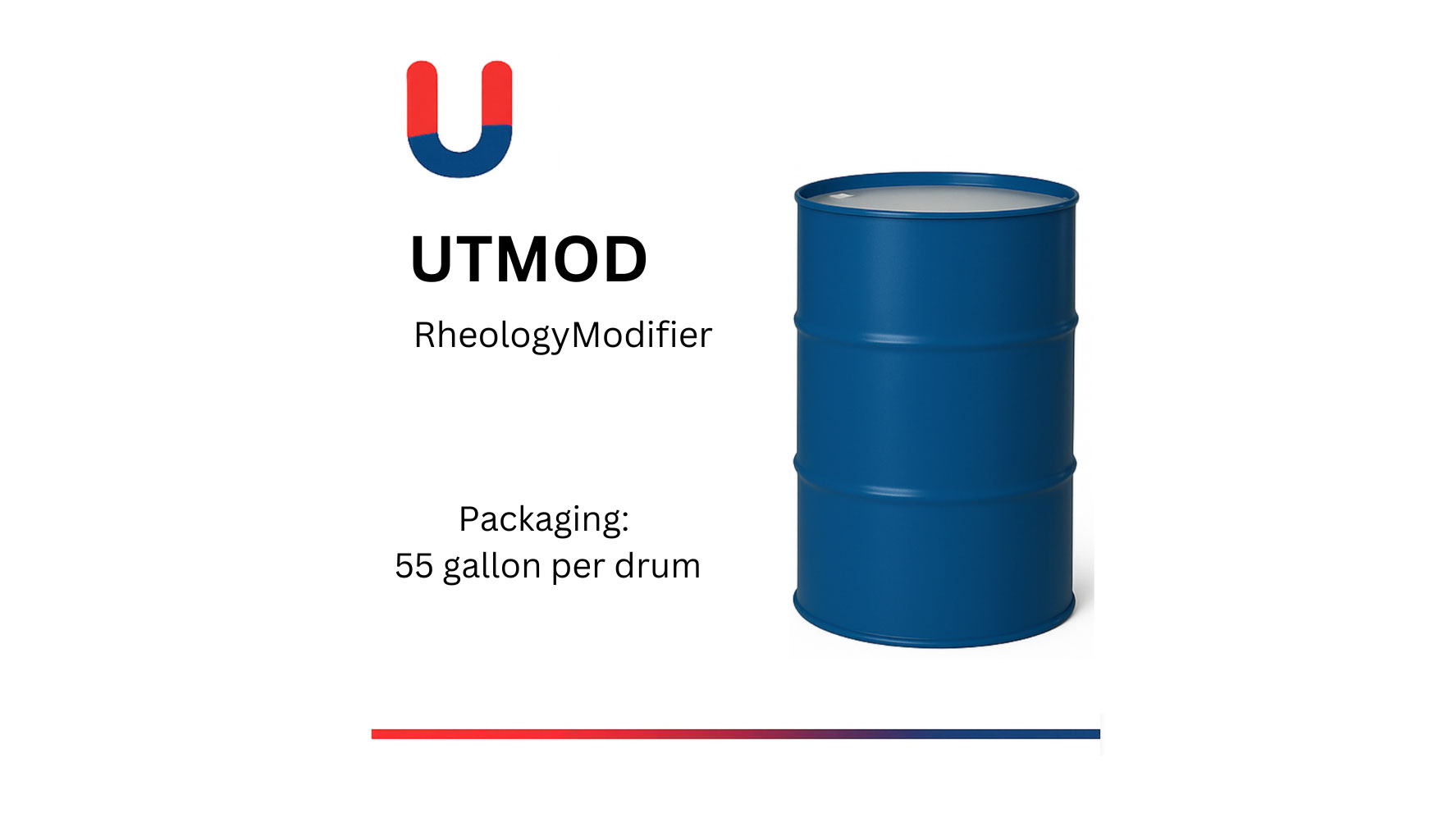
UTMOD is a polymeric rheology modifier designed specifically for oil-based mud.
Its stated functions include:
· Increasing LSRV
· Increasing YP
· Having a relatively slight impact on PV
· Improving OBM rheology
· Partially replacing organoclay in selected formulations
This makes UTMOD particularly relevant when the objective is rheological optimization rather than simply increasing bulk viscosity.
For example, if an OBM has inadequate LSRV and YP but already has relatively high PV, adding more organoclay may not be the most efficient solution. A polymeric rheology modifier may provide a more targeted approach.
Actual treatment levels and performance should always be established through laboratory testing using the target mud formulation.
Not every low-rheology OBM problem means that more viscosifier is required.
Sometimes the organoclay has not developed its full rheological potential because of:
· Insufficient high-shear mixing
· Insufficient mixing time
· Low aromatic content in the base oil
· Low base-oil temperature during addition
· Very low base-oil viscosity
· High oil-to-water ratio
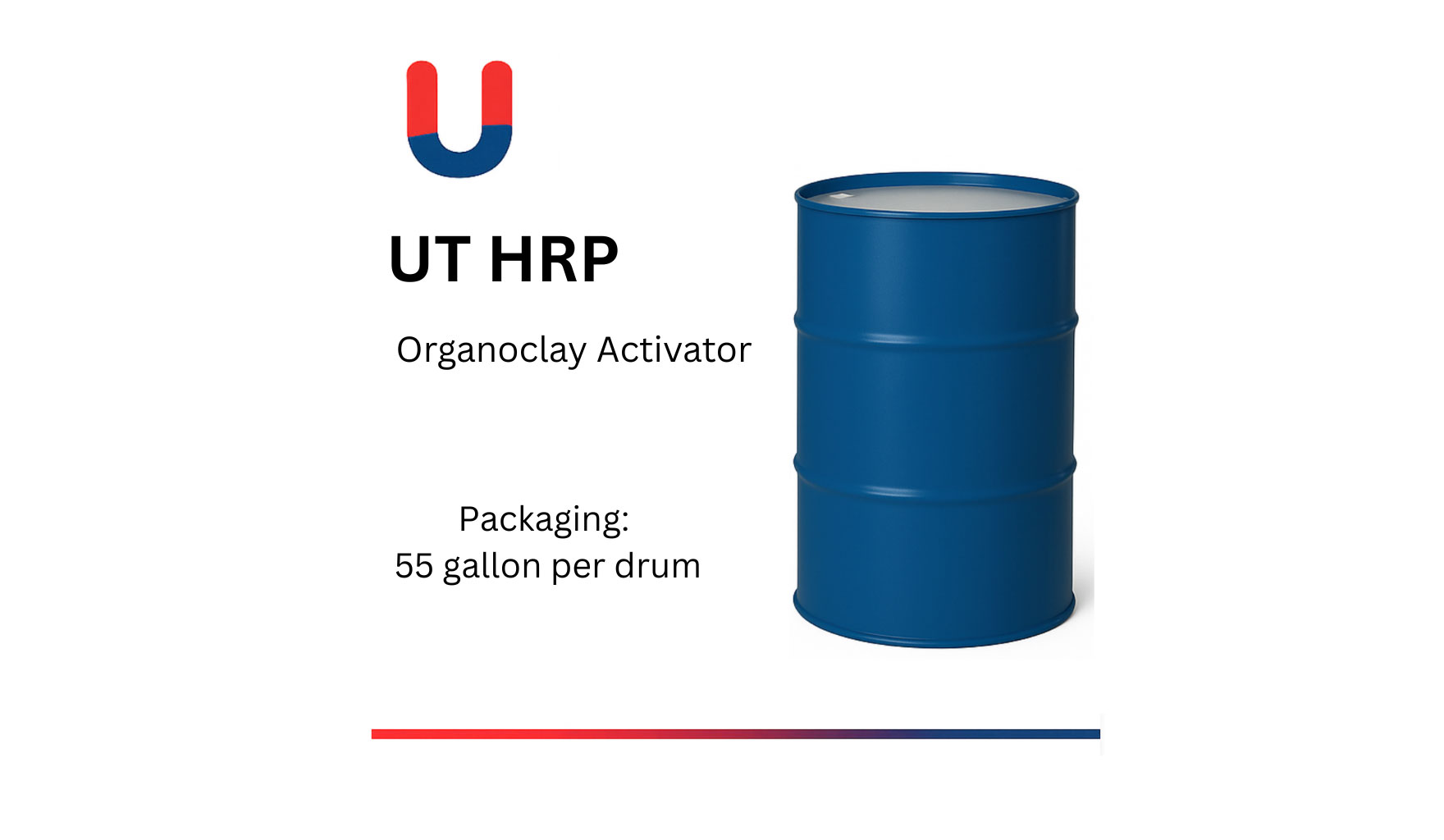
UT-HRP is an organic clay activator designed to rapidly develop gel strength and viscosity when the organoclay in an OBM has not adequately developed.
This represents a different troubleshooting approach:
Before increasing viscosifier concentration, determine whether the existing viscosifier has been adequately dispersed and activated.
UT-HRP is designed to work synergistically with organoclay to help achieve the desired rheological properties under these conditions.
Parameter | UTMOD | UT-gel(HT) |
Material type | Polymeric material | Organophilic clay |
Primary role | Rheology modifier | Viscosifier |
Main rheological target | LSRV and YP | Viscosity and gel structure |
PV impact | Relatively limited according to product positioning | Contributes to overall viscosity |
Gel structure | Supports rheology optimization | Strong gel-building function |
Suspension | Improves | Improves |
OBM application | Yes | Yes |
Organoclay replacement | May partially replace organoclay in selected formulations | Acts as the organoclay component |
High-temperature option | Product-specific | UT-gel(HT) designed for high-temperature OBM |
The two products should not be viewed as direct substitutes in every formulation. Their suitability depends on the required rheological profile, mud composition, temperature, oil/water ratio, solids loading, and other system parameters.
The right choice depends on the actual problem in the drilling-fluid system.
A viscosifier may be considered when the drilling fluid has:
· Insufficient overall viscosity
· Poor static suspension
· Inadequate gel structure
· Insufficient cuttings-carrying capacity
· Poor hole-cleaning performance related to inadequate rheological structure
For OBM, organophilic clay is a common starting point for building the required rheological structure.
A rheology modifier may be considered when:
· LSRV is too low
· YP is insufficient
· Low-shear suspension needs improvement
· Shear-thinning behavior needs adjustment
· Overall viscosity is already adequate
· PV is already relatively high
· Additional viscosifier would create an undesirable increase in viscosity
In these situations, the objective is to fine-tune the rheological profile rather than simply increase viscosity.
A viscosifier and rheology modifier do not necessarily compete with each other.
They can perform complementary functions.
For example:
Organoclay
→ establishes basic viscosity and gel structure
Polymeric rheology modifier
→ further adjusts LSRV, YP, and low-shear rheology
This type of combination may be useful when a drilling-fluid system requires both a stable structural framework and targeted rheological optimization.
The appropriate combination should be determined through laboratory testing rather than by assuming that higher additive concentration will always produce better performance.
The following troubleshooting framework can help identify the appropriate starting point.
Observed Drilling Fluid Problem | Potential Approach |
Overall viscosity is too low | Evaluate viscosifier concentration and dispersion |
Gel strength is insufficient | Evaluate viscosifier and gel-structure development |
LSRV is too low | Consider a rheology modifier and review overall formulation |
YP is too low | Optimize rheology rather than simply increasing total viscosity |
PV is already too high | Avoid simply adding more viscosifier; investigate solids and formulation |
Organoclay is not fully developed | Review shear, mixing time, base oil properties, and temperature; consider an organoclay activator |
Poor static suspension | Evaluate LSRV, gel strength, and solids loading |
Poor cuttings transport | Evaluate LSRV, YP, flow rate, annular velocity, and well geometry |
Rheology deteriorates at high temperature | Evaluate the thermal stability of the complete rheology package |
High salinity or calcium affects performance | Select additives specifically compatible with the fluid chemistry |
The appropriate strategy should be evaluated against the complete drilling-fluid system, including:
· Water/oil ratio
· Base-fluid type
· Temperature
· Salinity
· Calcium concentration
· Mud weight
· Solids loading
· Desired PV and YP
· LSRV
· Gel strength
· Hole geometry
· ECD limitations
· Required cuttings transport performance
The additive label alone should not determine the treatment strategy.
Rheology modifiers and viscosifiers are closely related but should not be treated as interchangeable terms in drilling-fluid design.
A viscosifier is generally selected to build viscosity and gel structure, supporting suspension, cuttings transport, and hole cleaning. A rheology modifier is more often selected to optimize specific properties such as LSRV, YP, gel strength, and shear-thinning behavior.
The distinction is functional rather than absolute. Some additives can perform both roles, and viscosifiers and rheology modifiers may be used together to establish and fine-tune the desired rheological profile.
For oil-based mud, UT-gel(HT)(High-Temperature Organophilic Clay) represents an organophilic clay viscosifier, while UTMOD(Rheology Modifier for Oil-Based Mud) is a polymeric rheology modifier designed to increase LSRV and YP with a relatively limited impact on PV. When organoclay does not adequately develop its rheological properties, UT-HRP(Organic Clay Activator) provides another approach by activating the organoclay rather than simply increasing its concentration.
Ultimately, the objective is not to maximize viscosity. It is to achieve a controlled rheological profile that provides adequate suspension and hole cleaning while maintaining manageable PV, pressure losses, ECD, and pumpability.
The appropriate rheology-control strategy depends on the drilling-fluid system, target rheological properties, temperature, solids loading, and operating conditions.
Unitech Chemicals provides drilling-fluid additives for water-based and oil-based mud systems, including polymeric rheology modifiers, organophilic clays, organoclay activators, and fluid-loss-control additives.
For technical requirements or product selection, contact the Unitech Chemicals technical team to discuss your drilling-fluid formulation and performance targets.
· Rheology Modifiers – additives for controlling viscosity, LSRV, YP, gel strength, and overall drilling-fluid rheology
· Organophilic Clays – viscosifiers for oil-based and synthetic-based drilling fluids
· UTMOD – polymeric rheology modifier for oil-based mud
· UT-gel(HT) – high-temperature organophilic clay viscosifier
· UT-HRP – organic clay activator for developing viscosity and gel strength in oil-based mud
· Fluid Loss Control Additives – additives for controlling filtration in water-based and oil-based drilling-fluid systems
No. They are related functional categories, but their primary objectives can differ. A viscosifier is generally used to build viscosity and rheological structure, while a rheology modifier is typically used to adjust specific rheological properties and achieve a desired overall flow profile.
Yes. The functions can overlap. An additive that increases viscosity may also affect YP, LSRV, gel strength, and shear-thinning behavior. The distinction is primarily based on the intended function within the formulation.
In oil-based mud, organoclay is commonly classified as a viscosifier because its primary function is to build viscosity and gel structure. However, because it changes the rheological behavior of the mud, it also has rheology-modifying effects.
Some rheology modifiers are designed to increase YP and LSRV while having a relatively limited effect on PV. However, actual performance depends on additive chemistry, dosage, base fluid, solids loading, temperature, and the complete mud formulation.
Some polymeric rheology modifiers may partially replace organoclay in selected formulations. However, they should not automatically be considered complete substitutes. Organoclay contributes important viscosity and gel-structure functions, while a polymeric rheology modifier may be used to target specific rheological properties.
First determine whether the problem is genuinely insufficient viscosification. Check solids loading, organoclay dispersion, mixing energy, mixing time, base-oil properties, oil/water ratio, temperature, and the current PV, YP, LSRV, and gel-strength profile. Adding more viscosifier without identifying the underlying cause may increase PV or gel strength beyond the desired range.