


Electrical Stability (ES) is one of the most important field tests used to evaluate the health and integrity of oil-based drilling fluids (OBDF), also known as oil-based muds (OBM). It measures the strength of the water-in-oil (W/O) emulsion and provides a rapid indication of whether the drilling fluid can maintain stable performance under contamination, mechanical shear, and downhole temperature stress.
In oil-based mud systems, water is dispersed as microscopic droplets within a continuous oil phase. Because water conducts electricity while oil is non-conductive, the voltage required to force electrical current through the emulsion reflects how effectively those water droplets are encapsulated by emulsifier films.
In general, higher ES values indicate stronger emulsification, better contamination resistance, and more reliable drilling fluid performance.
In challenging drilling environments such as high-temperature, high-pressure (HTHP) wells, extended-reach wells, and reactive shale formations, maintaining adequate electrical stability is essential for wellbore stability, predictable rheology, and efficient drilling operations.
Electrical Stability (ES) in oil-based drilling fluids is a voltage-based measurement used to assess the quality and strength of the water-in-oil emulsion. Higher ES values generally indicate better emulsifier performance, stronger resistance to contamination, and more stable drilling fluid properties. Low ES values may signal emulsion breakdown, water contamination, thermal degradation, or insufficient emulsifier concentration.
Electrical Stability is a laboratory and field measurement that indicates how effectively conductive water droplets are isolated within the non-conductive oil phase.
In a properly formulated oil-based mud:
· Water droplets are finely dispersed.
· Each droplet is coated by a durable emulsifier film.
· Conductive pathways between droplets are minimized.
· The emulsion remains resistant to separation.
When the emulsion is strong, electrical current cannot easily pass through the mud, resulting in a higher ES reading. When emulsifier films weaken or water droplets begin to coalesce, conductivity increases and the ES value declines.
Electrical Stability is measured using an ES meter. A mud sample is placed in a test cell, and voltage is gradually increased until current passes through the emulsion. The voltage at which conductivity occurs is recorded as the Electrical Stability value, expressed in volts.
· Rapid field-based diagnostic tool
· Highly sensitive to emulsion integrity
· Useful for detecting contamination and additive degradation
· Commonly included in daily mud checks
· Standardized under API testing procedures
Although ES is one of the most widely used indicators of emulsion quality, it should always be interpreted together with rheology, fluid loss, solids content, and other drilling fluid properties.
ES Value (Volts) | Interpretation |
Below 300 V | Poor emulsion stability |
300–500 V | Marginal stability |
500–800 V | Good stability |
800–1500+ V | Excellent stability |
Actual acceptable values depend on mud formulation, oil/water ratio, brine salinity, and operator specifications. Some high-performance invert emulsion systems maintain ES values above 1,000 volts under severe HTHP conditions.
Electrical Stability directly reflects the condition of the water-in-oil emulsion. Stable ES values indicate that water droplets remain effectively dispersed and isolated within the oil phase.
Low ES readings often precede:
· Emulsion breakdown
· Water separation
· Mud instability
· Inconsistent fluid properties
Emulsion quality significantly affects viscosity, gel strength, and cuttings suspension.
When ES declines, droplet coalescence may lead to erratic rheology and poor cuttings transport, especially in highly deviated and horizontal wells.
Strong emulsions help form thin, low-permeability filter cakes that reduce filtrate invasion and stabilize sensitive formations.
Higher ES values are commonly associated with:
· Better fluid loss control
· Reduced differential sticking risk
· Improved shale inhibition
· Lower formation damage potential
Sudden changes in ES often indicate operational issues before they become critical.
Possible causes include:
· Formation water contamination
· Acid gas intrusion (CO₂ and H₂S)
· Thermal degradation of emulsifiers
· Excess drilled solids
· Incompatible chemical additives
Click to learn more about oil-based mud products:
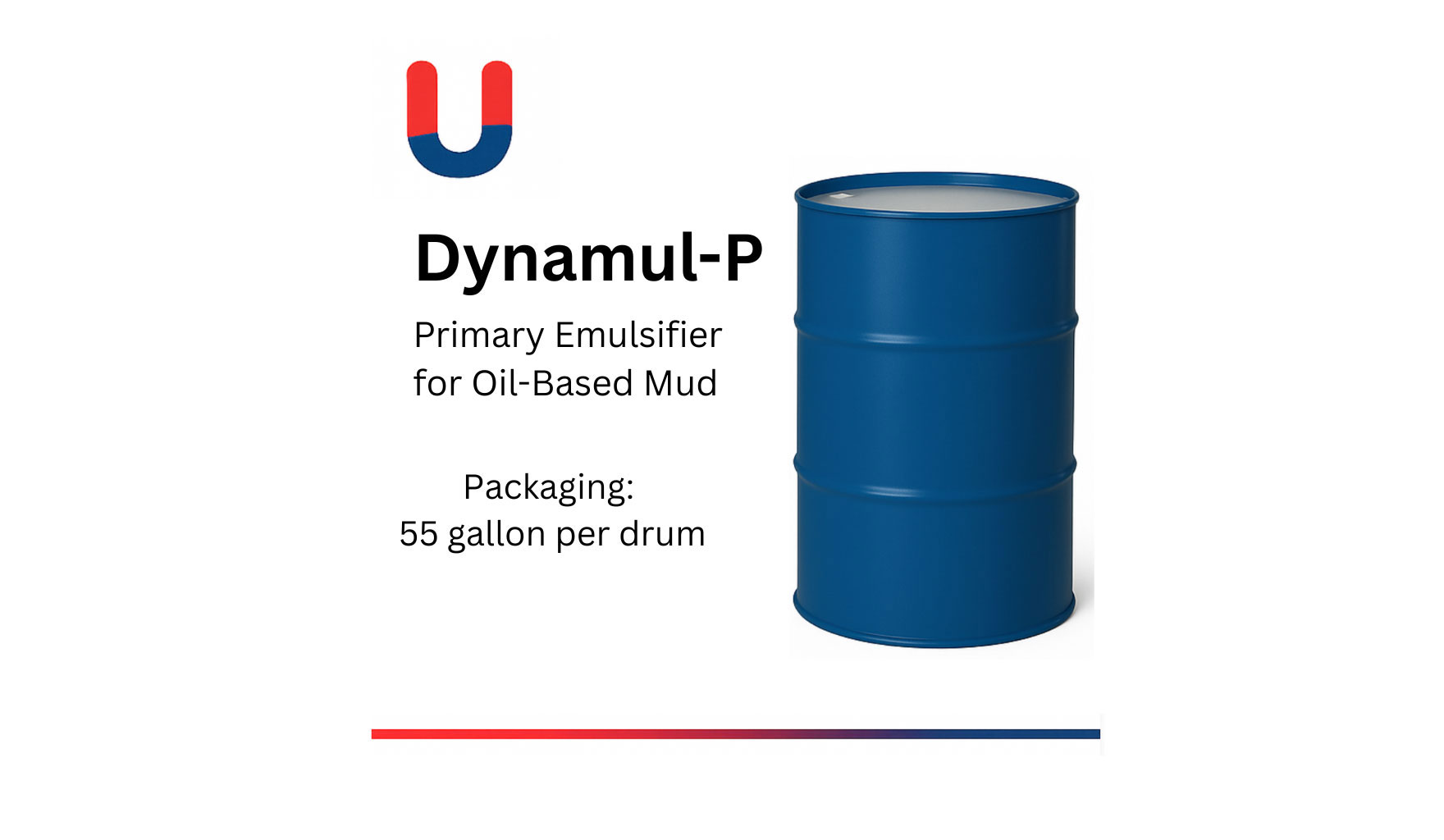 | 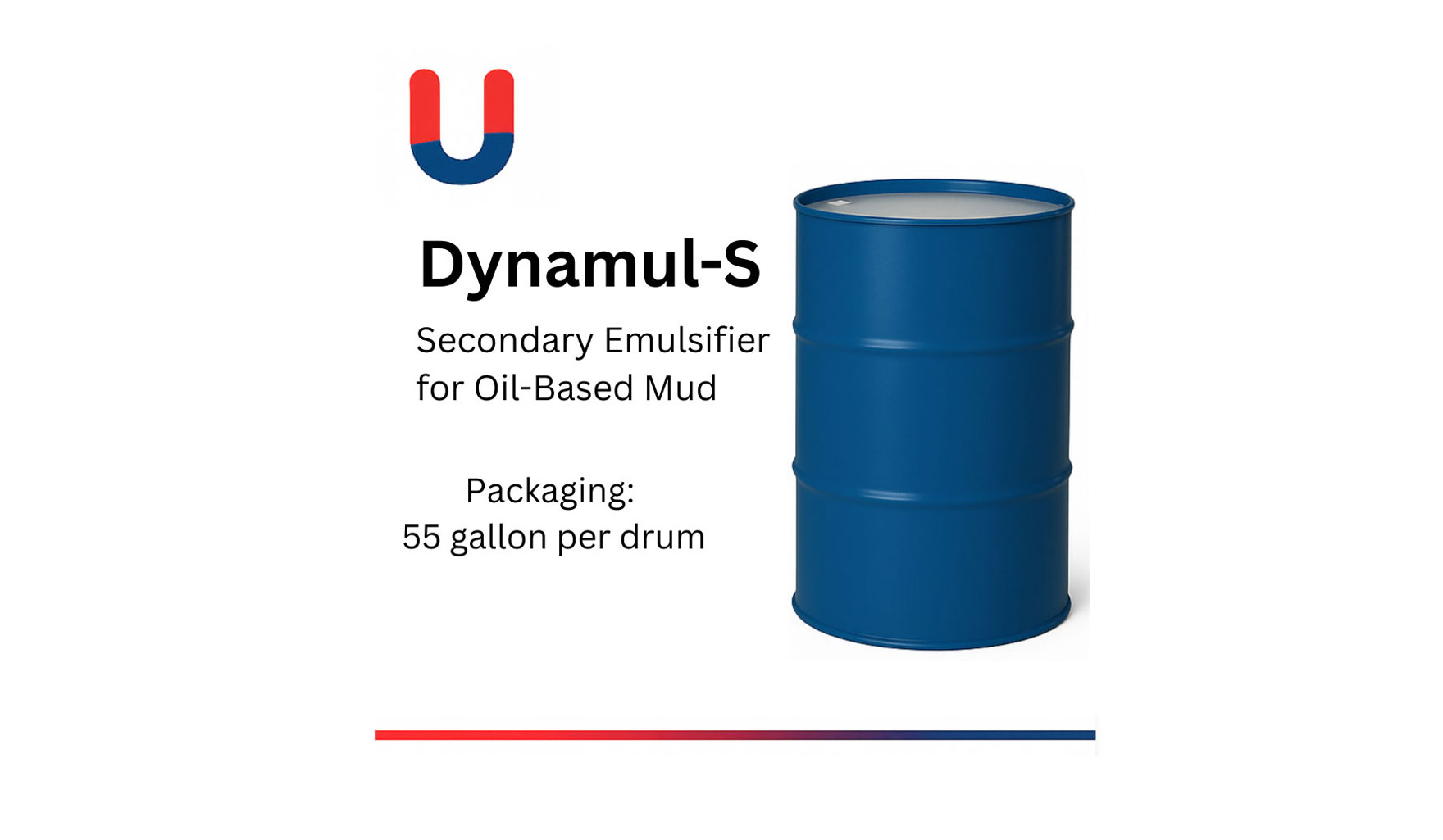 |
Primary Emulsifier for Oil-Based Mud Product Code: Dynamul-P Packing:55 Gallon / Drum | Secondary Emulsifier for Oil-Based Mud Product Code: Dynamul-S |
Primary emulsifiers create the initial water-in-oil emulsion, while secondary emulsifiers strengthen film integrity and improve long-term stability.
Insufficient dosage, poor product compatibility, or thermal degradation can significantly reduce ES.
Calcium chloride (CaCl₂) is commonly used to control internal phase salinity.
Proper salinity helps maintain droplet structure and enhances emulsion stability. Excessively low or high salinity may destabilize the emulsion and reduce ES.
Elevated temperatures weaken emulsifier films and increase droplet mobility.
In HTHP wells, only thermally stable emulsifiers can maintain adequate ES and prevent emulsion breakdown.
Water-wet solids, drilled cuttings, and improperly treated weighting materials can create conductive pathways that lower ES.
Maintaining fully oil-wet solids is critical to preserving emulsion integrity.
The ratio of oil to internal brine phase influences droplet spacing and emulsion strength. Excess water can increase conductivity and reduce electrical stability.
Low ES values are often symptoms of broader emulsion problems rather than isolated issues.
Common causes include:
· Insufficient primary or secondary emulsifier
· Water contamination
· Incorrect CaCl₂ concentration
· High drilled solids loading
· Poor oil-wetting of barite and cuttings
· Thermal degradation of additives
· Excessive dilution
· Acid gas contamination
· Incompatible treatment chemicals
Understanding the root cause is essential for selecting the correct treatment.
If ES values begin to decline, the following corrective actions are commonly used:
Restore emulsifier reserves and strengthen interfacial films.
Re-establish the proper internal phase salinity.
Reduce fine solids and remove water-wet contaminants.
Convert solids surfaces to oil-wet condition.
Maintain formulation within design specifications.
Evaluate performance after thermal conditioning.
A high ES value generally indicates good emulsion integrity, but it does not guarantee overall drilling fluid performance.
For example, a mud may exhibit high ES while still suffering from:
· Excessive viscosity
· Poor fluid loss control
· Inadequate shale inhibition
· High solids loading
Therefore, ES should always be interpreted alongside:
· Rheology
· HTHP fluid loss
· Retort analysis
· Alkalinity
· Solids content
· Lubricity
To maintain stable electrical stability during drilling operations:
· Test ES regularly during routine mud checks.
· Monitor trends rather than relying on single readings.
· Maintain adequate emulsifier reserves.
· Control internal phase salinity.
· Keep weighting materials and drilled solids oil-wet.
· Use efficient solids control equipment.
· Conduct hot-roll evaluations for HTHP applications.
· Investigate sudden ES changes immediately.
Consistent monitoring allows engineers to detect problems early and maintain stable drilling fluid performance.
Electrical stability is particularly important in:
· High-temperature, high-pressure wells
· Deep and ultra-deep drilling
· Extended-reach and horizontal wells
· Reactive shale formations
· HPHT completion operations
· Offshore drilling environments
In these conditions, emulsion failure can lead to severe operational problems, including stuck pipe, poor hole cleaning, and formation instability.
In many systems, values above 500 volts are considered acceptable, while premium invert emulsions often exceed 800 to 1,500 volts. Required values depend on formulation and operator standards.
Common causes include insufficient emulsifier, incorrect salinity, water contamination, water-wet solids, and thermal degradation.
No. ES is an important indicator of emulsion integrity, but it should be evaluated alongside rheology, fluid loss, and solids data.
Electrical Stability (ES) is one of the most valuable indicators of oil-based drilling fluid performance. By measuring the voltage required for electrical current to pass through the emulsion, ES provides rapid insight into:
· Emulsifier effectiveness
· Contamination resistance
· Thermal stability
· Wettability control
· Overall emulsion integrity
Consistent ES monitoring, combined with informed formulation adjustments, helps drilling engineers maintain reliable OBM performance, reduce operational risk, and improve drilling efficiency in challenging well conditions.
Unitech Chemicals is a professional manufacturer of drilling fluid additives for oil-based, water-based, and polymer-based drilling systems.
For oil-based drilling fluid applications, Unitech Chemicals supplies:
· Fluid Loss Control Additives
With extensive experience in laboratory evaluation, formulation optimization, and field application support, Unitech Chemicals helps customers develop high-performance drilling fluid systems for high-temperature and complex drilling environments.
Looking to improve electrical stability and emulsion performance in your oil-based drilling fluids? Contact Unitech Chemicals for laboratory-tested additives and customized technical solutions.