


Oil based drilling fluids (OBDF), also known as oil based muds (OBM), are essential for maintaining wellbore stability, shale inhibition, and lubrication in technically challenging drilling operations such as high-temperature, high-pressure (HTHP) wells, deep wells, and horizontal or extended-reach wells.
In field operations, common issues such as:
· Low electrical stability (ES)
· Emulsion instability or water separation
· Poor rheology or barite sag
are often directly related to imbalanced emulsifier systems, particularly the coordination between primary and secondary emulsifiers.
Central to any oil-based mud system is the emulsifier package, typically divided into primary emulsifiers and secondary emulsifiers, each playing a distinct role in stabilizing the water-in-oil (W/O) emulsion and optimizing drilling fluid performance.
Understanding their differences and proper application is critical for drilling engineers and formulators seeking reliable fluid behavior under varying downhole conditions.
· Primary emulsifier: creates the emulsion structure
· Secondary emulsifier: enhances stability and ES
In OBM systems, both are required for stable performance, especially in high-temperature and contaminated environments.
Primary emulsifiers are surface-active agents that stabilize the interface between the continuous oil phase and the dispersed water phase. In a water-in-oil emulsion, the continuous phase is oil, and finely dispersed water droplets are suspended within it. The primary emulsifier forms a protective film around these water droplets to prevent coalescence.
Key functions include:
Emulsion Formation: Facilitates the initial dispersion of water into the oil phase.
Electrical Stability: Improves the emulsion’s resistance to conductivity changes caused by drilling solids or formation fluids.
Contaminant Tolerance: Helps maintain emulsion stability in the presence of drill cuttings, salts, or other contaminants.
Flow and Rheology Support: Indirectly contributes to viscosity, gel strength, and cuttings suspension by maintaining droplet integrity.
Without effective primary emulsifiers, water droplets can merge, leading to phase separation, reduced wellbore stability, and inconsistent fluid performance.
Secondary emulsifiers reinforce and optimize the emulsion system created by primary emulsifiers. They do not primarily form the emulsion but enhance its stability and performance over time.
Key functions include:
Enhancing Electrical Stability (ES): Helps maintain the emulsion’s resistance to phase separation under variable conditions.
Improving Contaminant Tolerance: Increases emulsion resilience to drilling solids, salts, or other impurities.
Supporting Long-Term Stability: Maintains emulsion integrity in high-temperature or extended drilling intervals.
Optimizing Droplet Uniformity: Helps achieve a more uniform water droplet size distribution, reducing density or viscosity fluctuations.
By complementing primary emulsifiers, secondary emulsifiers improve emulsion robustness and overall oil-based muds performance.
Feature | Primary Emulsifier | Secondary Emulsifier |
Main Function | Creates and maintains the basic emulsion structure | Reinforces stability and electrical resistance |
Emulsion Formation | Directly responsible | Auxiliary role |
Contaminant Tolerance | Provides basic protection | Enhances tolerance |
Electrical Stability | Core contributor | Maintains and strengthens ES |
Long-Term Stability | Ensures basic performance | Extends stability under temperature or shear |
Adjustment Strategy | Select type and dosage based on well conditions | Adjust dosage to optimize performance |
Primary emulsifiers are the foundation of the emulsion system, while secondary emulsifiers act as an optimization tool to ensure consistent performance under mechanical, thermal, and chemical challenges.
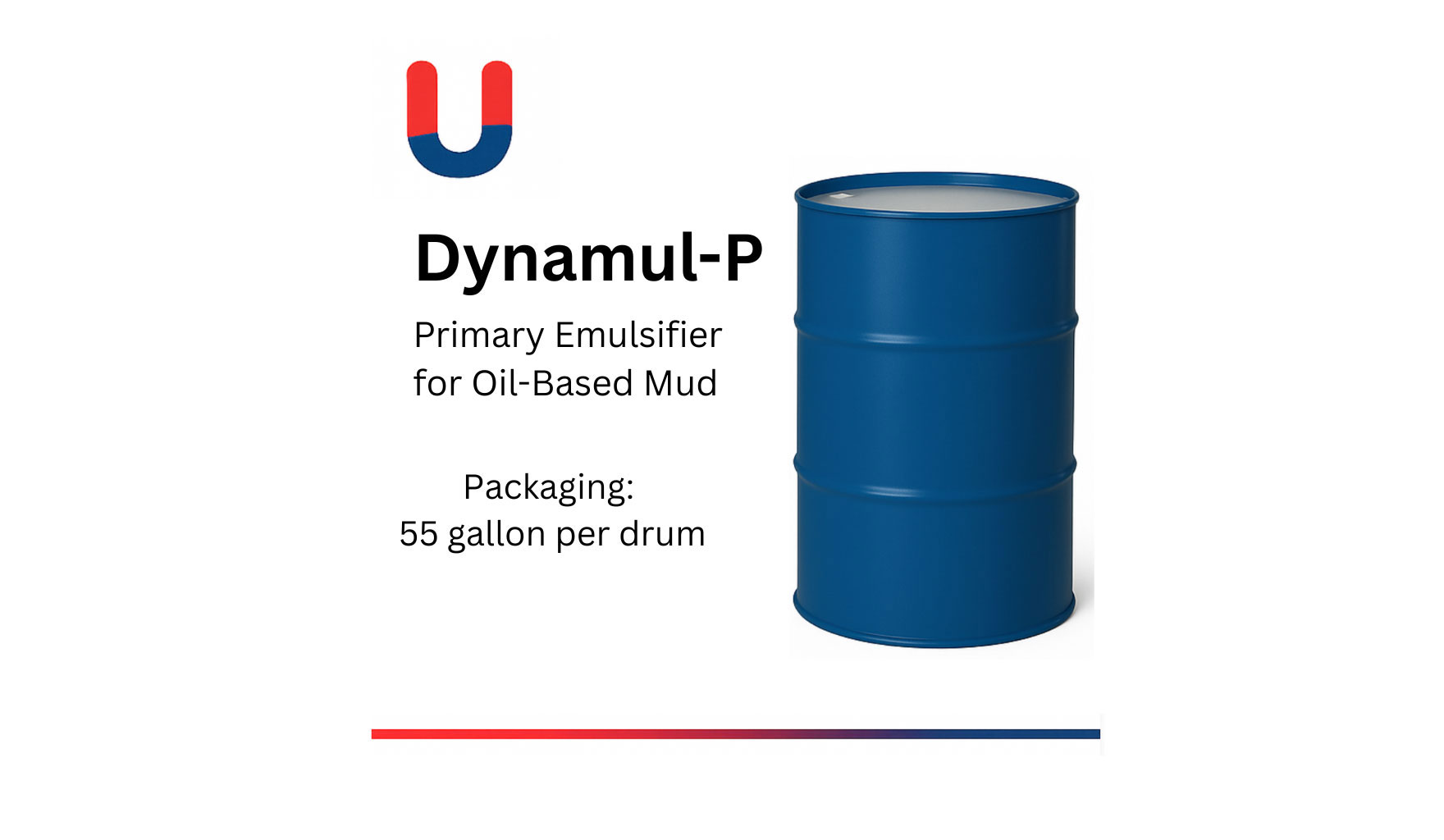 | 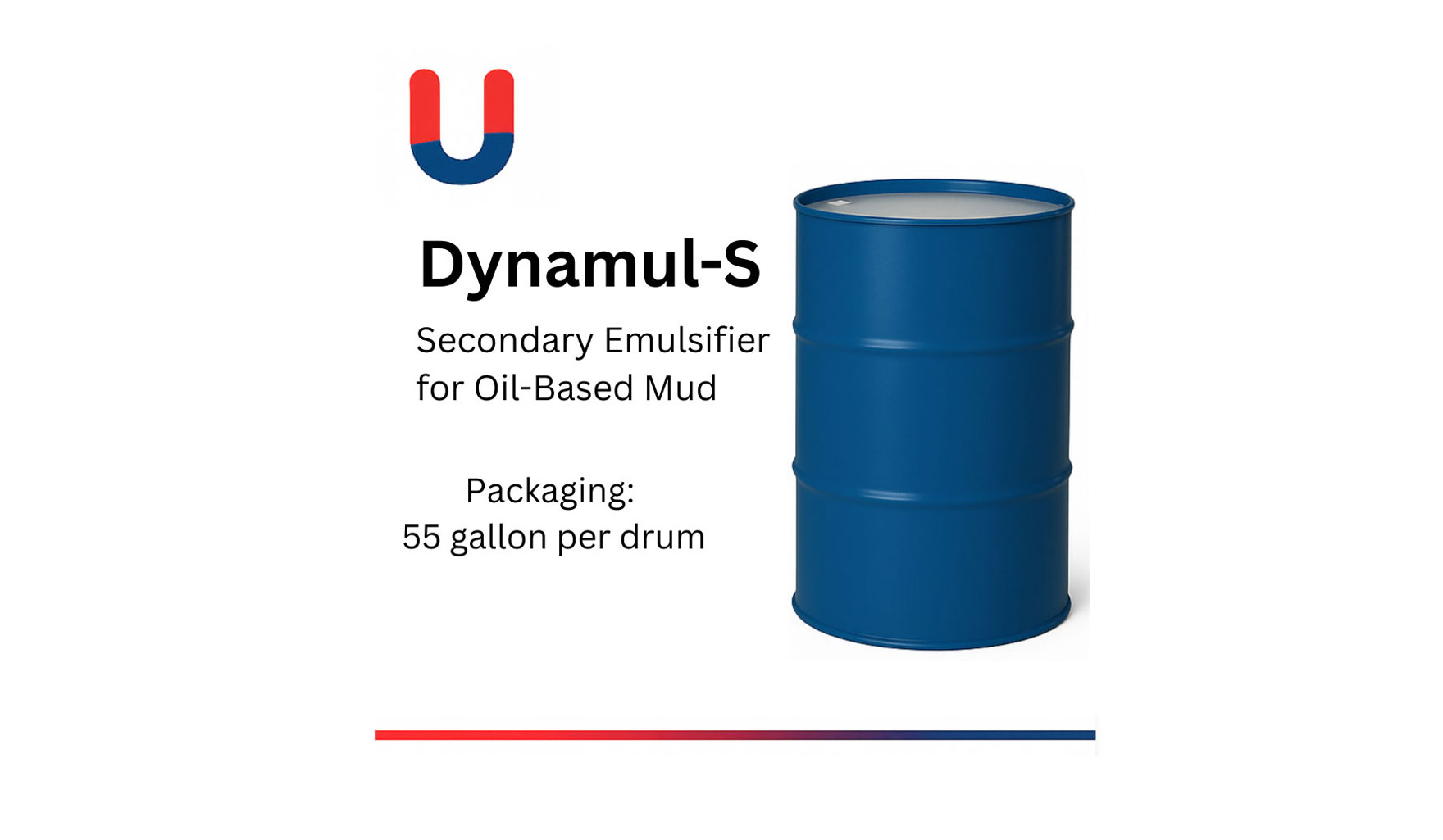 |
Primary Emulsifier for Oil-Based Mud Product Code: Dynamul-P Packing:55 Gallon / Drum | Secondary Emulsifier for Oil-Based Mud Product Code: Dynamul-S |
Dosage Balance: Insufficient primary emulsifier leads to instability, while excessive dosage may impact rheology. Secondary emulsifiers should optimize, not replace, primary function
Compatibility: Both primary and secondary emulsifiers must be compatible with base oils, organophilic clays, wetting agents, weighting agents, and filtration control additives.
Temperature Adaptation: High-temperature wells require thermally stable emulsifier combinations to prevent phase separation or degradation.
Contamination Control: Emulsifier systems should be able to tolerate drill cuttings, formation water, and other impurities, with proper monitoring of electrical stability (ES) and emulsion appearance.
Field experience shows that many OBM failures are caused not by a single additive, but by improper balance between primary and secondary emulsifiers.
For better OBM performance, consider the following:
· Low ES:
→ Check primary emulsifier dosage first, then increase secondary emulsifier
· Water separation:
→ Improve primary emulsifier film strength + adjust secondary support
· High-temperature instability:
→ Use thermally stable emulsifier combination
· Contamination issues:
→ Increase secondary emulsifier for tolerance
Proper coordination between the two is essential for stable emulsion performance.
Recommended Reading
For practical troubleshooting and field optimization, see:
Oil-Based Drilling Fluids Troubleshooting Guide
How to Improve Electrical Stability (ES) in OBM
· Low ES → Increase secondary emulsifier
· Water separation → Improve primary emulsifier
· High temperature → Use both with thermal stability
· Contamination → Increase secondary emulsifier
In oil-based mud systems, primary emulsifiers create and maintain the water-in-oil emulsion, providing the foundation for fluid performance, while secondary emulsifiers reinforce electrical stability, contamination tolerance, and long-term emulsion robustness.
A well-balanced emulsifier system ensures:
· Stable rheology
· Effective cuttings transport
· Filtration control
· Reliable performance under HTHP conditions
Unitech Chemicals is a specialized drilling fluid additive manufacturer, offering chemical solutions for oil-based, water-based, and polymer-based drilling fluid systems.
For oil-based mud applications, Unitech Chemicals supplies:
· Primary and secondary emulsifiers
· Wetting agents and oil-wetting additives
· Rheology modifiers and filtration control chemicals
With expertise in formulation compatibility, performance monitoring, and field application guidance, Unitech Chemicals supports drilling operations under diverse conditions, including high-temperature, high-pressure, deep, and horizontal wells.
If you are facing issues such as low ES, emulsion instability, or formulation challenges, our technical team can help you select the right emulsifier combination and optimize your system.
· Get emulsifier selection recommendations
· Request Technical Data Sheet (TDS)
· Apply for sample testing
Contact us to improve your oil-based mud performance.
Q1: Can I use only primary emulsifier in OBM?
No. Without secondary emulsifier, long-term stability and ES may decline.
Q2: What happens if secondary emulsifier is too low?
ES drops and emulsion becomes unstable under stress.
Q3: Which emulsifier affects ES more?
Primary builds the system, but secondary plays a key role in maintaining ES.