


Oil-based drilling fluids (OBDF), also known as oil-based muds (OBM), are critical for maintaining wellbore stability, lubrication, and shale inhibition in technically demanding drilling operations.
At the core of any oil-based drilling fluid system lies the primary emulsifier, a key additive responsible for creating and maintaining a stable water-in-oil (W/O) emulsion.
However, in field applications, operators often encounter issues such as:
· Low electrical stability (ES)
· Water separation or emulsion breaking
· Poor rheology or barite sag
In most cases, these problems are directly related to emulsifier performance and selection.
Understanding how primary emulsifiers work is essential for drilling engineers, mud engineers, and formulators to optimize fluid performance under varying downhole conditions.
Primary emulsifiers are surface-active agents designed to stabilize the interface between the continuous oil phase and the dispersed water phase. In a water-in-oil emulsion, the continuous phase is oil, and tiny droplets of water are dispersed throughout. The primary emulsifier surrounds these water droplets, forming a protective film that prevents coalescence.
Key roles include:
Emulsion Formation: Facilitates the initial dispersion of water droplets into the oil phase.
Electrical Stability Development: Enhances the emulsion’s resistance to electrical conductivity changes caused by drilling solids or formation fluids.
Contaminant Tolerance: Helps the system maintain stability in the presence of drill cuttings, salts, or other contaminants.
Rheology Support: Contributes indirectly to viscosity, gel strength, and cuttings suspension by maintaining droplet stability.
Without effective primary emulsifiers, water droplets tend to merge, leading to phase separation, reduced wellbore stability, and impaired drilling performance.
· Emulsion Formation: Facilitates the initial dispersion of water droplets into the oil phase.
· Electrical Stability Development: Enhances the emulsion’s resistance to electrical conductivity changes caused by drilling solids or formation fluids.
· Contaminant Tolerance: Helps the system maintain stability in the presence of drill cuttings, salts, or other contaminants.
· Rheology Support: Contributes indirectly to viscosity, gel strength, and cuttings suspension by maintaining droplet stability.
Without effective primary emulsifiers, water droplets tend to merge, leading to phase separation, reduced wellbore stability, and impaired drilling performance.
Primary emulsifiers function through a combination of surface chemistry, molecular orientation, and interfacial stabilization.
The emulsifier molecules have both hydrophilic (water-attracting) and lipophilic (oil-attracting) groups. These molecules migrate to the water-oil interface, anchoring one end in the water droplet and the other in the oil phase. This reduces interfacial tension and stabilizes the droplet.
Once adsorbed, the emulsifier molecules form a thin, elastic film around each water droplet. This film:
· Prevents droplet coalescence under shear or pressure
· Inhibits droplet deformation and merging during pumping
· Enhances emulsion electrical stability (ES), improving resistance to phase separation
Primary emulsifiers also interact with other additives, such as organophilic clays and wetting agents, to maintain droplet suspension, control viscosity, and reduce the risk of barite sag or uneven density distribution.
Several variables influence how effectively primary emulsifiers function:
Diesel, mineral, or synthetic oils each provide a different environment for emulsifier adsorption and mobility.
Compatibility with the oil phase affects emulsion stability and rheology.
Salts in the water phase (e.g., CaCl₂) can improve emulsion stability up to a certain threshold.
Excessive ionic strength may overwhelm emulsifier capacity, leading to droplet coalescence.
High temperatures can reduce emulsifier effectiveness by altering molecular orientation and increasing droplet mobility.
Thermally stable emulsifiers are required for high-temperature, high-pressure (HTHP) wells.
Pumping, mixing, and circulation apply shear forces to the emulsion.
Effective primary emulsifiers maintain droplet integrity under these mechanical stresses.
· Dosage: Correct emulsifier concentration is essential; too little can cause instability, while excessive amounts may increase cost or impact fluid rheology
· Compatibility: Must be compatible with secondary emulsifiers, organophilic clays, weighting agents, and filtration control additives
· Monitoring: Electrical stability (ES) and visual inspection are key field indicators
· Adjustment: Emulsifier type or dosage may need adjustment based on contamination, temperature, or well conditions
In practice, improper emulsifier selection or dosage is one of the most common causes of OBM instability.
To achieve stable performance in oil-based mud systems, selection should be based on actual drilling conditions:
· High-temperature wells (HTHP): Use thermally stable emulsifiers
· High salinity systems: Select calcium-resistant emulsifiers
· Deep or extended-reach wells: Choose strong film-forming emulsifiers
· Fast drilling operations: Use fast-emulsifying types for quick system building
A combination of primary + secondary emulsifier is typically required for optimal performance.
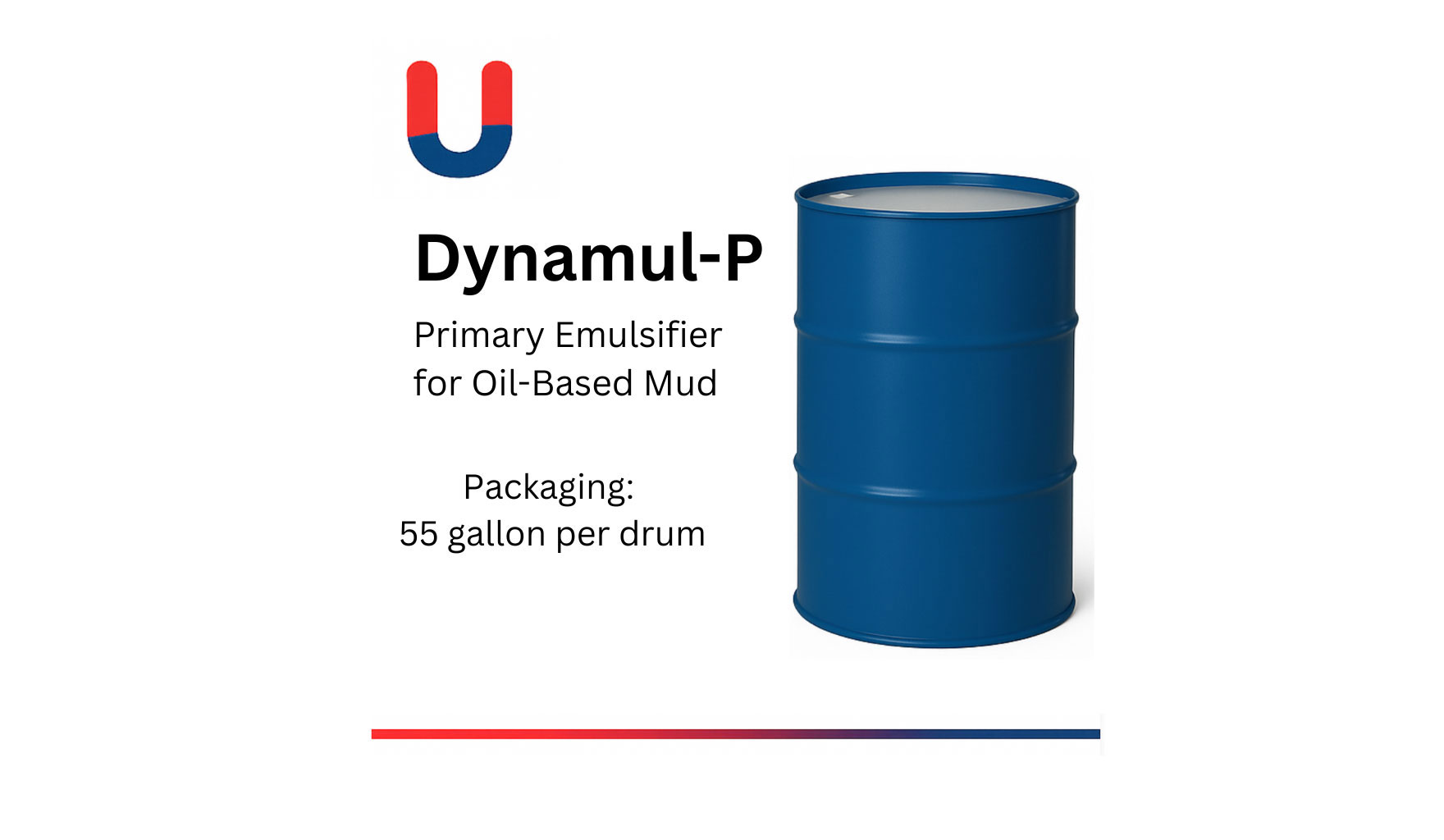 | 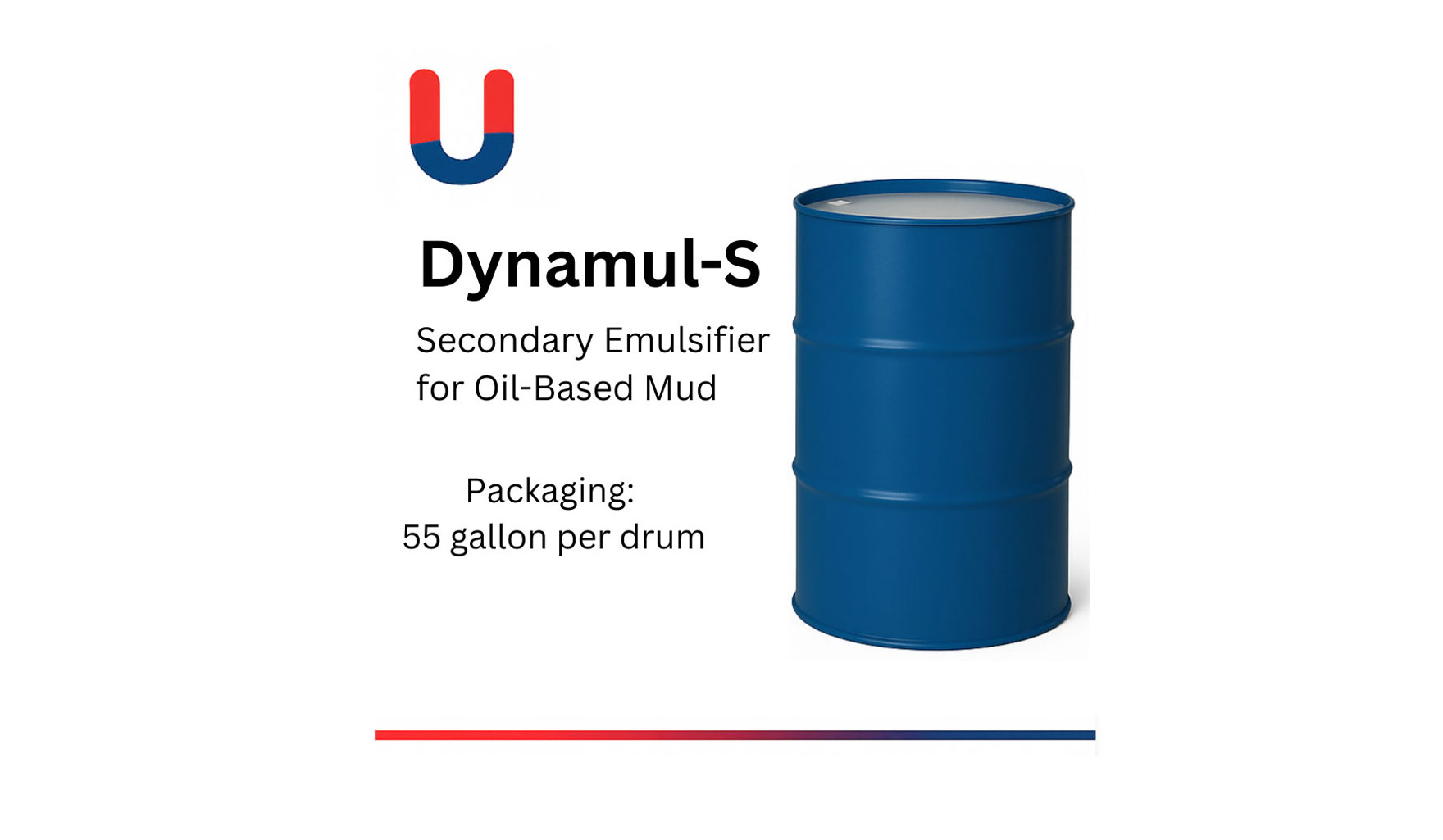 |
Primary Emulsifier for Oil-Based Mud Product Code: Dynamul-P Packing:55 Gallon / Drum | Secondary Emulsifier for Oil-Based Mud Product Code: Dynamul-S |
Primary emulsifiers are indispensable in oil-based drilling fluids, forming the backbone of emulsion stability and overall fluid performance. By stabilizing water droplets in oil, they help maintain:
· Consistent rheology
· Effective cuttings transport
· Filtration control
· Shale inhibition
· Lubricity
A strong understanding of primary emulsifier function enables formulators and drilling engineers to design OBM systems that remain stable under mechanical, thermal, and chemical challenges.
Unitech Chemicals is a specialized drilling fluid additive manufacturer, providing chemical solutions for oil-based, water-based, and polymer-based drilling fluid systems.
In the context of oil-based drilling fluids, Unitech Chemicals supplies:
· Primary and secondary emulsifiers
· Wetting agents and oil-wetting additives
· Rheology modifiers and filtration control chemicals
With expertise in formulation compatibility, performance monitoring, and field application guidance, Unitech Chemicals supports drilling operations in diverse conditions, including high-temperature, high-pressure, deep, and horizontal wells.
If you are facing emulsion instability, low ES, or formulation challenges, our technical team can provide tailored product recommendations and testing support.
· Request Technical Data Sheet (TDS)
· Get emulsifier selection guidance
· Apply for sample testing
Contact us to optimize your oil-based drilling fluid system.