


Oil-based drilling fluids (OBDF), commonly known as oil-based muds (OBM), are widely used in technically demanding drilling operations where water-based systems cannot meet performance requirements. Proper formulation of oil-based drilling fluids is essential to achieve stable emulsion behavior, reliable rheology, effective filtration control, and long-term wellbore stability—especially in high-temperature, high-pressure (HTHP), deep, and horizontal wells.
This guide focuses on the fundamental principles of oil-based drilling fluid formulation, explaining the role of each component, formulation logic, and practical considerations for adapting oil-based drilling fluid systems to different drilling conditions.
The goal of oil-based drilling fluid formulation is to create a stable water-in-oil (W/O) emulsion system that can:
Maintain consistent rheology under varying temperature and pressure
Inhibit shale hydration and dispersion
Provide sufficient lubricity to reduce torque and drag
Control filtration and protect the formation
Maintain well control through accurate density management
Unlike water-based fluids, oil-based drilling fluid formulation prioritizes emulsion stability and oil-wetting behavior, which directly influence drilling performance and risk control.
An oil-based drilling fluid is fundamentally composed of two phases and multiple functional additives:
Continuous phase: Oil
Dispersed phase: Water (emulsified)
All formulation decisions revolve around stabilizing this structure while meeting operational requirements.
The base oil determines many physical and environmental characteristics of the drilling fluid.
Diesel oil
Mineral oil
Low-aromatic mineral oil
Synthetic base oil (ester, olefin, paraffin-based)
Thermal stability
Viscosity behavior
Environmental and regulatory requirements
Compatibility with emulsifiers and organophilic clays
Base oil selection affects not only performance but also fluid maintenance strategy throughout the well.
Water is intentionally incorporated into oil-based drilling fluid systems as an internal phase.
5–30% by volume
The water phase is usually treated with salts such as calcium chloride (CaCl₂) to:
Reduce water activity
Improve shale inhibition
Increase emulsion robustness
The salinity of the water phase is a critical parameter influencing emulsion stability and fluid tolerance to contamination.
Primary emulsifiers are responsible for creating and maintaining the water-in-oil emulsion. They form a protective film around water droplets, preventing coalescence under shear, temperature, and pressure.
Key functions include:
Emulsion formation
Initial electrical stability development
Base tolerance to contaminants
Secondary emulsifiers reinforce the emulsion system by:
Enhancing electrical stability (ES)
Improving tolerance to drilled solids
Supporting long-term emulsion durability
A balanced primary–secondary emulsifier ratio is essential for maintaining stable performance throughout the drilling interval.
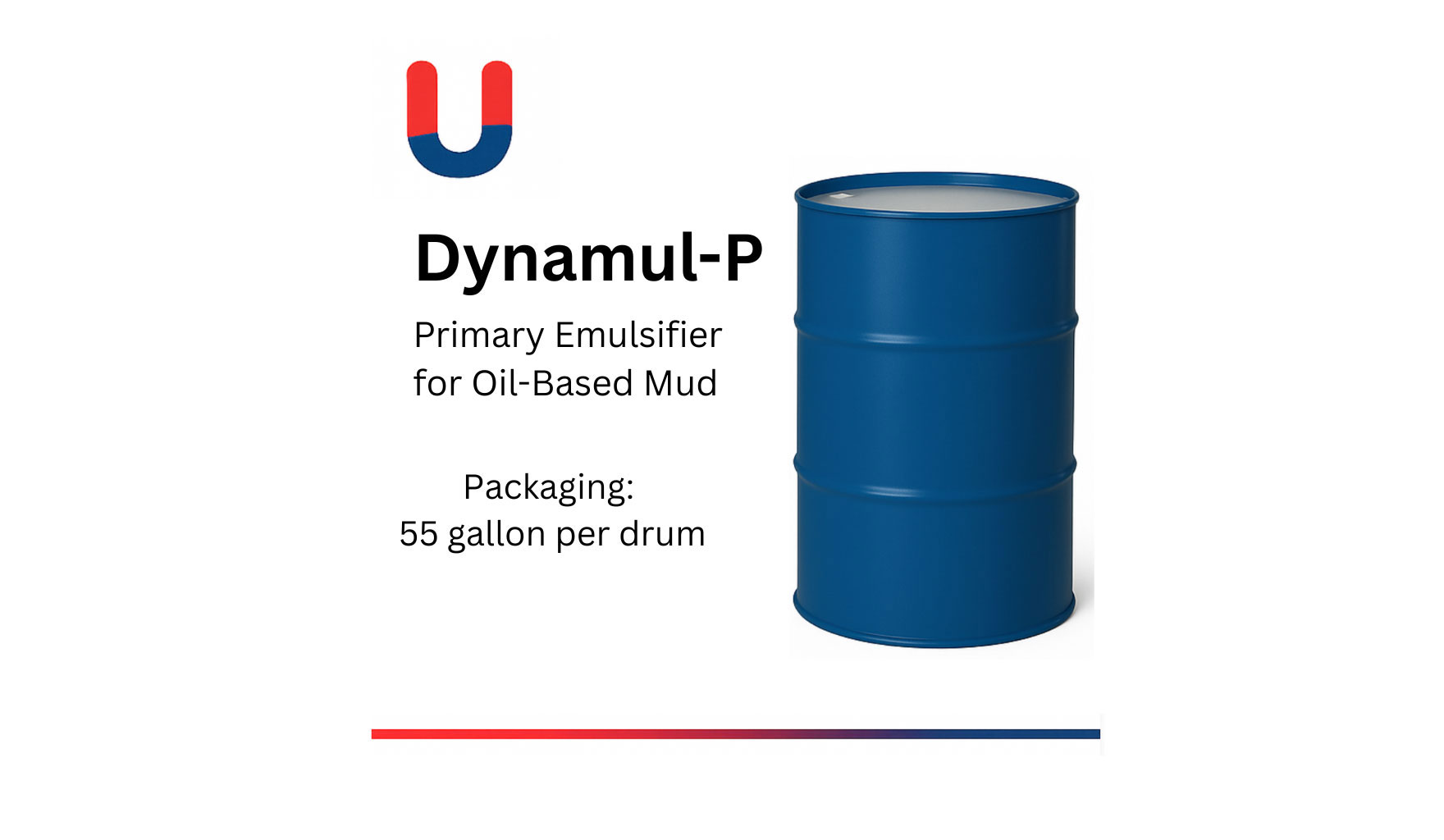 | 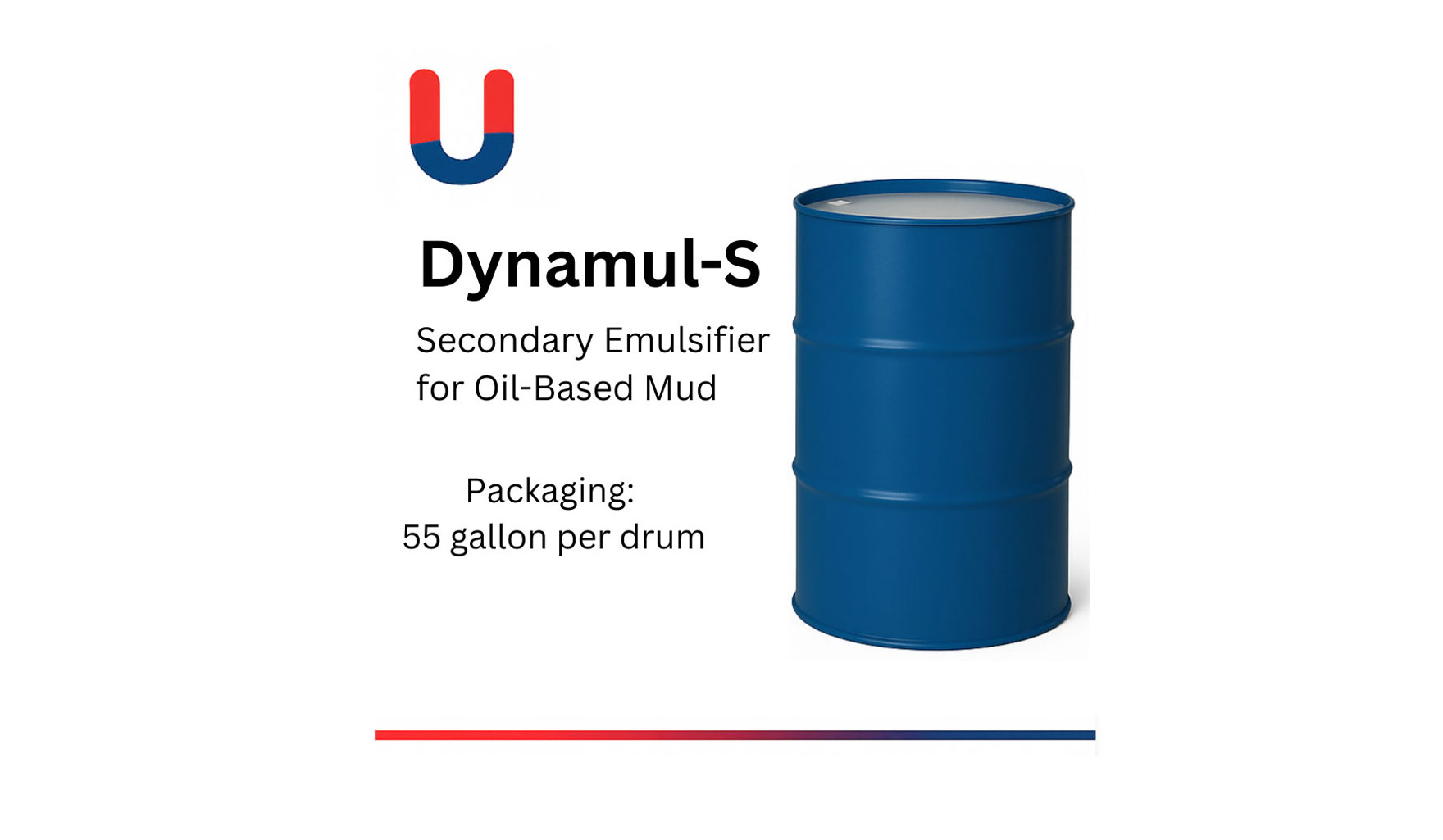 |
Primary Emulsifier for Oil-Based Mud Product Code: Dynamul-P Packing:55 Gallon / Drum | Secondary Emulsifier for Oil-Based Mud Product Code: Dynamul-S |
Maintaining oil-wet solids is critical in oil-based drilling fluid systems.
Wetting agents ensure that:
Drilled solids remain oil-wet
Barite remains uniformly dispersed
Rheological stability is preserved
Poor wettability can lead to excessive viscosity, barite sag, and emulsion instability.
Organophilic clay provides:
Base viscosity
Gel strength
Suspension capability
It must be properly activated and dispersed to avoid excessive yield point or poor low-shear-rate behavior.
Additional rheology modifiers may be used to fine-tune:
Plastic viscosity (PV)
Yield point (YP)
Gel strength progression
Stable rheology is essential for cuttings transport, ECD control, and suspension during static periods.
Oil-based drilling fluids rely on specialized filtration control additives to manage fluid loss under HTHP conditions.
Form thin, low-permeability filter cakes
Minimize filtrate invasion into formations
Reduce differential sticking risk
Filtration control performance is closely linked to emulsion quality and solids management.
Barite (most common)
Hematite (high-density applications)
Uniform dispersion
Sag prevention
Compatibility with emulsifier and wetting systems
Improper density control can lead to well control risks or sag-related instability.
Oil-based drilling fluid systems are exposed to various contaminants during drilling, including:
Drill cuttings
Formation water
Cement
Acid gases (CO₂, H₂S)
Formulation must anticipate these risks by ensuring sufficient emulsifier reserve, wettability control, and solids management practices.
Regular monitoring of:
Electrical stability (ES)
Rheology
Oil–water ratio
Salinity
is essential to maintain system integrity.
High temperatures affect:
Emulsifier performance
Oil viscosity
Filtration behavior
Rheological stability
Formulations intended for elevated temperatures must use components with proven thermal resistance to prevent degradation and phase separation.
While exact formulations vary, a standard oil-based drilling fluid design follows this logic:
Select base oil suitable for temperature and environment
Establish oil–water ratio and water phase salinity
Build emulsion system with primary and secondary emulsifiers
Adjust wettability and rheology
Add filtration control agents
Weight up to required density
Fine-tune properties through testing and monitoring
Formulation is an iterative process that evolves with well conditions.
Oil-based drilling fluid formulation is a systematic engineering process rather than a fixed recipe. Achieving stable performance requires a clear understanding of emulsion chemistry, rheological balance, filtration control, and contamination tolerance.
When properly designed and maintained, oil-based drilling fluids provide reliable performance in complex drilling environments where water-based systems reach their limits. A well-formulated oil-based drilling fluid system supports safe drilling operations, stable wellbores, and predictable hydraulic behavior throughout the drilling lifecycle.
Unitech Chemicals is a specialized manufacturer and supplier of drilling fluid additives, providing chemical solutions for oil-based drilling fluids, water-based drilling fluids, and polymer-based drilling systems. The company focuses on the development and production of functional additives such as emulsifiers, wetting agents, filtration control additives, and rheology modifiers used in conventional and complex drilling environments.
With experience serving drilling fluid formulators, service companies, and oilfield operators, Unitech Chemicals supports a wide range of applications including high-temperature wells, shale formations, deep and extended-reach drilling operations. Its product portfolio is designed to align with common industry formulation practices and can be adapted to different base oils, salinity levels, and operational requirements.
Unitech Chemicals places emphasis on formulation compatibility, performance consistency, and technical support, assisting customers in optimizing drilling fluid systems through laboratory evaluation and application guidance. By supplying drilling fluid additives to global markets, the company contributes to safer, more stable, and more efficient drilling fluid performance across diverse geological conditions.