


Symptom | Possible Cause | Recommended Action |
Low ES | Weak emulsifier / contamination | Increase secondary emulsifier |
Water separation | Poor emulsifier compatibility | Upgrade primary emulsifier |
High fluid loss | Unstable emulsion | Improve emulsifier system |
Barite sag | Poor rheology | Adjust organophilic clay |
Oil-based drilling fluids (OBDF), also known as oil-based muds (OBM), are widely used in complex drilling operations due to their excellent thermal stability, shale inhibition, lubricity, and wellbore stability.
However, in field operations, engineers often encounter issues such as:
· Low electrical stability (ES)
· Emulsion instability or water separation
· Abnormal rheology or barite sag
· Performance decline under high temperature
These problems are often related to emulsifier performance, additive compatibility, or improper system balance.
Understanding common problems and their practical solutions is essential for maintaining efficient and safe drilling operations.
Water-in-oil emulsions can break due to temperature fluctuations, contamination, or incorrect emulsifier selection, leading to:
· Phase separation
· Reduced electrical stability (ES)
· Poor rheology
· Check emulsifier type and dosage: Ensure primary and secondary emulsifiers are suitable for temperature and base oil
· Monitor water content and salinity: Maintain proper oil-water ratio and CaCl₂ levels
· Minimize contamination: Control formation water and drill solids
· Maintain mechanical stability: Avoid excessive shear
In many cases, upgrading to a high-performance primary emulsifier can significantly improve emulsion stability.
Abnormal viscosity may cause poor cuttings transport or excessive torque.
· Optimize organophilic clay and rheology modifiers
· Check emulsifier performance: Stable droplets are critical for consistent rheology
· Monitor temperature and contamination
Emulsifier performance directly affects droplet integrity and overall rheology stability.
Excessive fluid loss can lead to differential sticking and formation damage.
· Use compatible filtration control additives
· Maintain stable emulsion structure
· Control drilled solids
Stable emulsifier systems contribute to better filter cake quality and reduced fluid loss.
Weighting materials may settle, causing density variation and well control risks.
· Optimize rheology and suspension capacity
· Ensure compatibility of emulsifier and wetting agents
· Monitor density regularly
Proper emulsifier and wetting agent combination helps maintain uniform solid distribution.
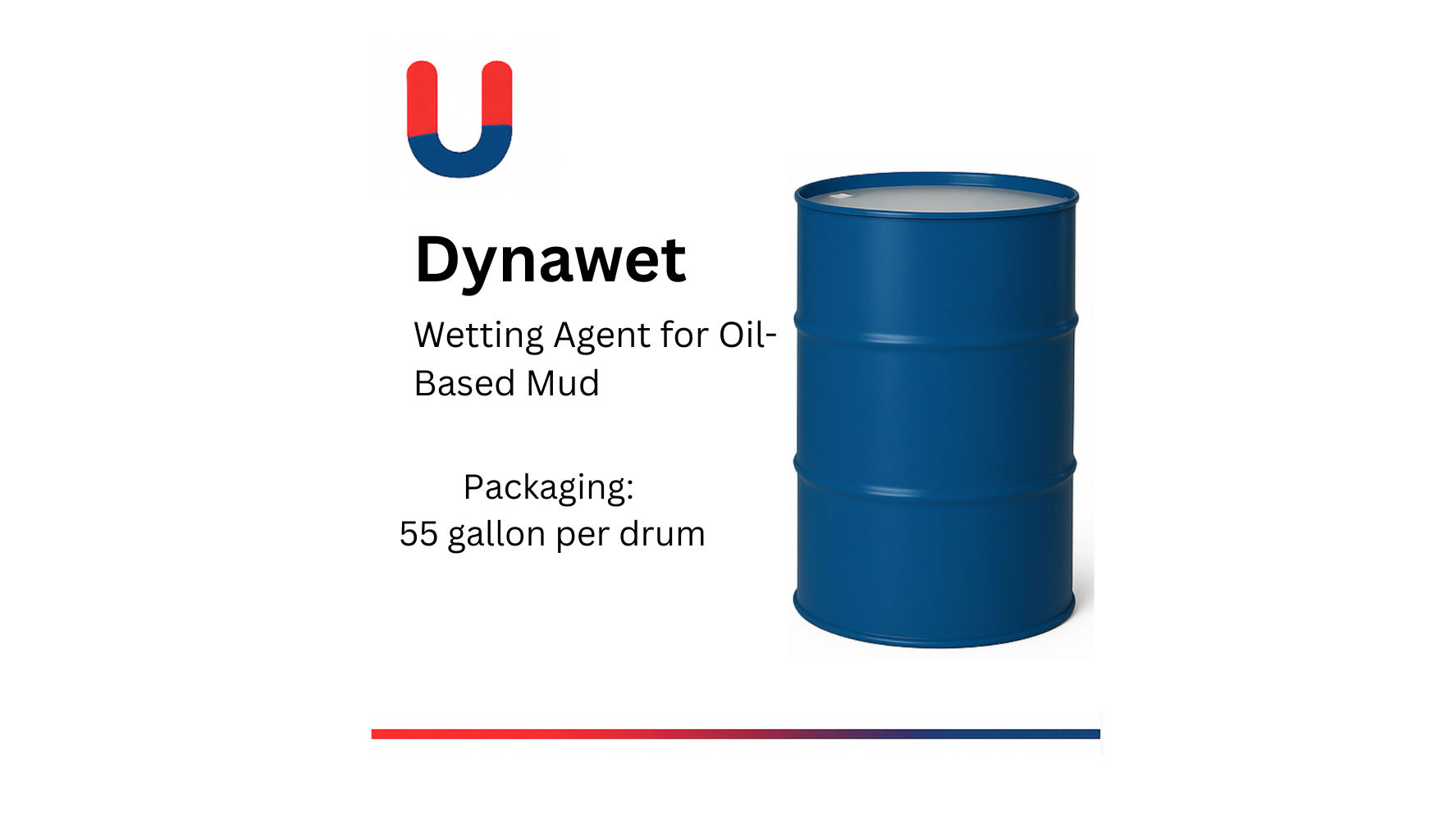 | 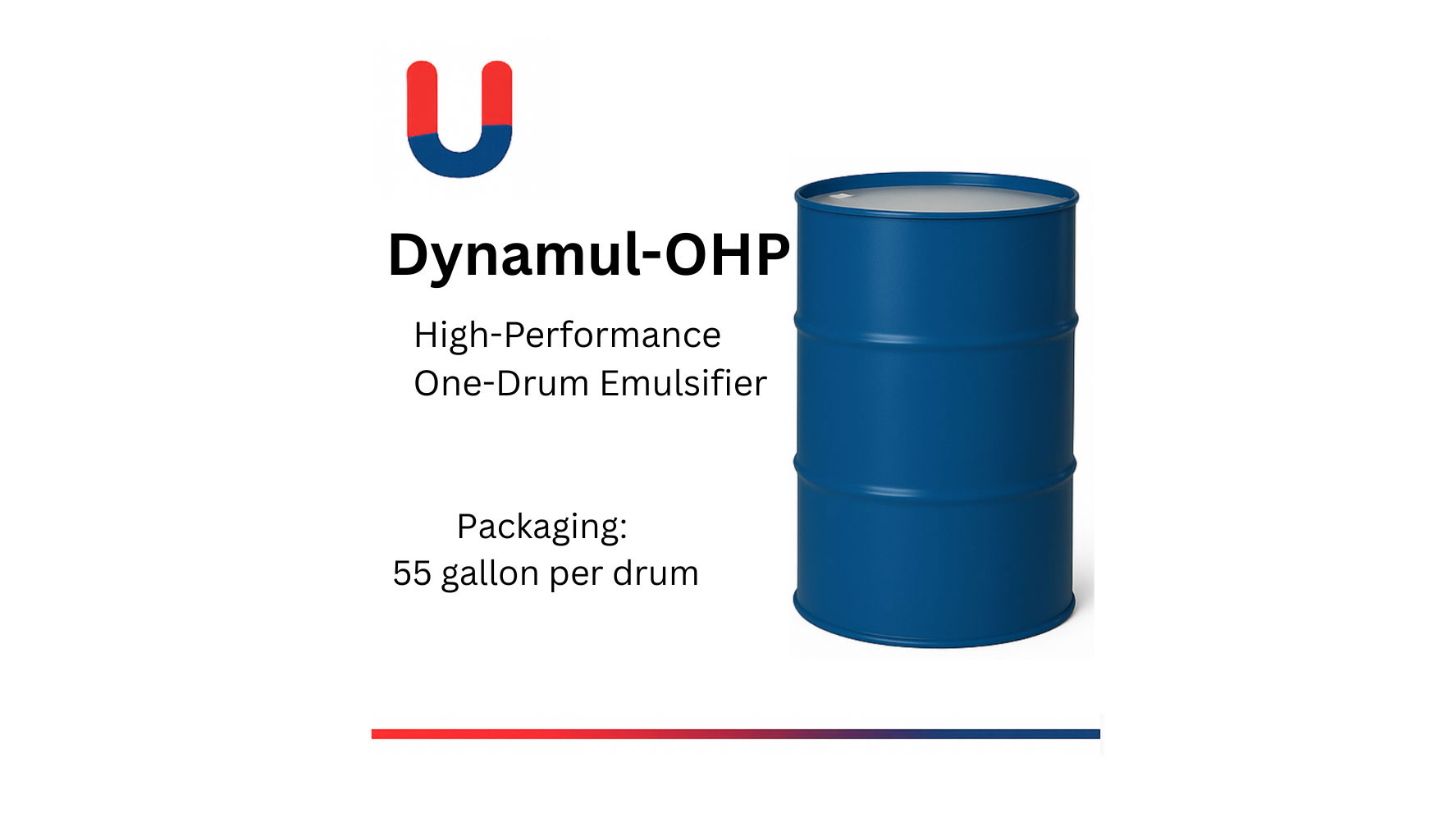 |
Wetting Agent for Oil-Based Mud Product Code: Dynawet | High-Performance One-Drum Emulsifier Product Code: Dynamul-OHP Packing: 55 gallon per drum |
OBM performance may decline in HTHP wells due to additive degradation.
· Use thermally stable emulsifiers
· Monitor ES and rheology under temperature
· Adjust formulation in real time
High-temperature resistant emulsifiers are critical for maintaining performance above 150°C.
Contamination from formation fluids or solids can destabilize the system.
· Maintain sufficient emulsifier reserve
· Implement solids control equipment
· Monitor and adjust fluid properties
Secondary emulsifiers play an important role in improving contamination tolerance.
Common oil based muds problems—such as emulsion instability, viscosity fluctuations, filtration issues, barite sag, and high-temperature performance challenges—can be effectively mitigated through:
· Proper emulsifier selection and dosage
· Balanced use of primary and secondary emulsifiers
· Continuous monitoring and adjustment
· Effective contamination control
A systematic approach ensures reliable drilling performance under complex conditions.
Unitech Chemicals is a professional manufacturer of drilling fluid additives, specializing in solutions for oil-based, water-based, and polymer-based drilling fluid systems.
For oil-based drilling fluids, Unitech Chemicals provides:
· Primary and secondary emulsifiers
· Wetting agents and oil-wetting additives
· Rheology modifiers and filtration control chemicals
With expertise in additive compatibility and field performance evaluation, Unitech Chemicals supports drilling operations across high-temperature, deep, and complex wells.
If you are facing:
· Low electrical stability (ES)
· Emulsion instability
· High-temperature performance issues
· Barite sag or rheology problems
Our technical team can help diagnose your system and recommend optimized solutions.
· Emulsifier selection guidance
· Technical Data Sheet (TDS)
· Sample testing support