


Balancing primary and secondary emulsifiers in an oil-based mud (OBM) system is not simply a matter of adding more chemicals. It involves optimizing the emulsifier package to maintain a stable water-in-oil emulsion, achieve reliable electrical stability (ES), ensure effective oil-wetting of solids, and deliver consistent performance under actual drilling conditions.
In general:
· Primary emulsifiers build and maintain the emulsion structure.
· Secondary emulsifiers strengthen the emulsion, improve oil-wetting, and enhance thermal stability.
· Effective balancing requires evaluating the entire fluid system, including contamination levels, oil-water ratio, salinity, rheology, and temperature exposure.
The goal is not maximum treatment levels, but maximum system performance.
The performance of an oil-based mud depends heavily on the interaction between primary and secondary emulsifiers.
When the balance is incorrect, operators may experience:
· Low electrical stability (ES)
· Water separation
· Poor oil-wetting
· Barite sag
· Rheology instability
· Increased chemical consumption
· Reduced drilling efficiency
· Non-productive time (NPT)
A properly balanced emulsifier system helps maintain:
· Stable water-in-oil emulsion
· Consistent ES retention
· Reliable suspension properties
· Improved contamination tolerance
· Better HTHP performance
· Lower overall treatment costs
One of the most common misconceptions is that balancing emulsifiers simply means increasing dosage.
In reality, balance refers to achieving the optimal relationship between emulsifier performance and overall fluid properties.
A balanced OBM system should provide:
· Stable emulsion structure
· Satisfactory ES values
· Good solids oil-wetting
· Stable rheology
· Acceptable fluid-loss performance
· Efficient chemical utilization
Adding more emulsifier does not always improve performance. In some cases, excessive treatment can increase costs and negatively affect rheology without solving the underlying problem.
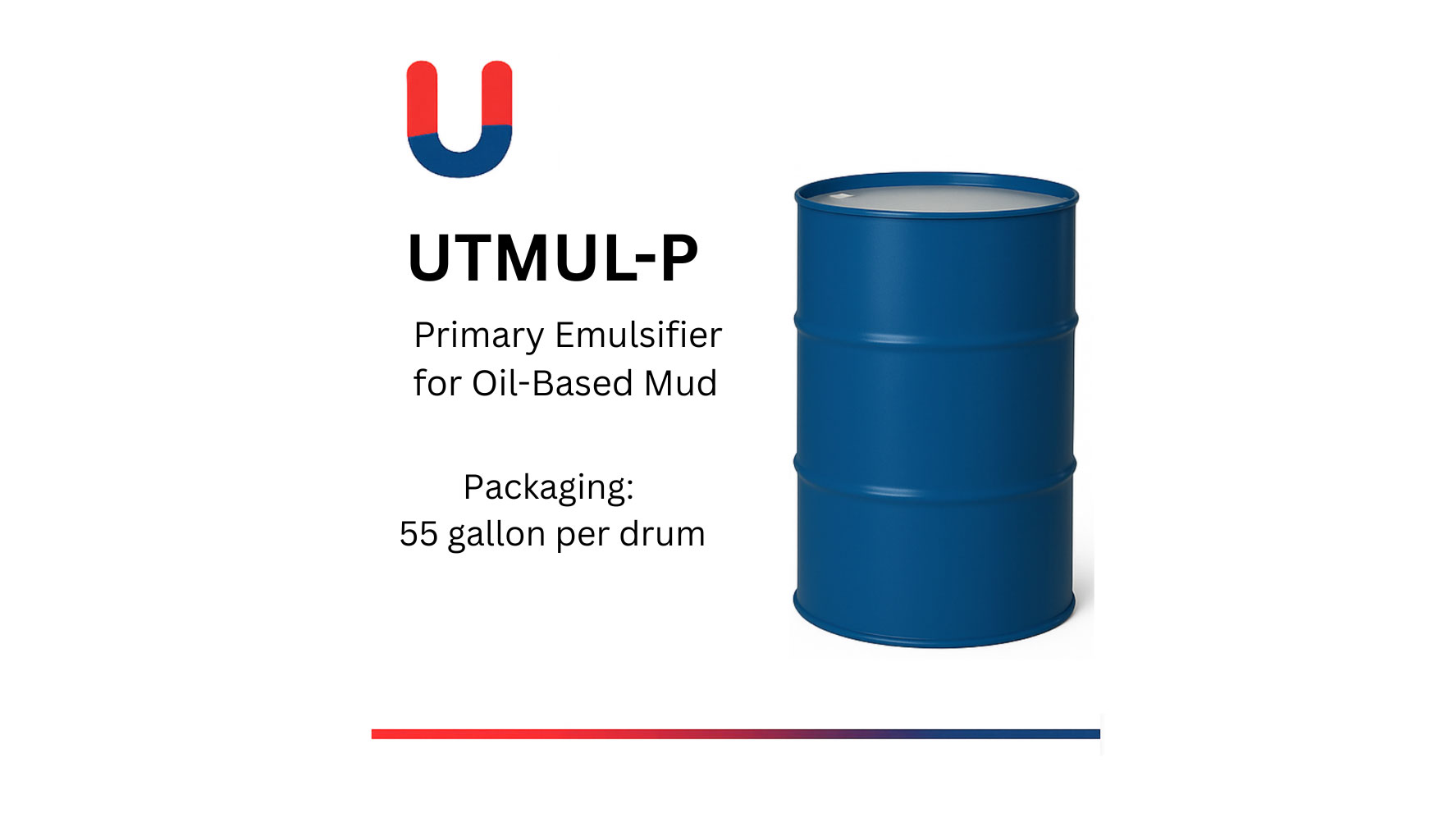
【Primary Emulsifier for Oil-Based Mud】
For a detailed comparison of the two products, see:
Primary vs Secondary Emulsifiers in Oil-Based Mud Systems
The primary emulsifier serves as the foundation of the emulsion system.
Main functions include:
· Creating water-in-oil emulsion structure
· Building initial ES
· Maintaining droplet dispersion
· Supporting overall fluid stability
Without sufficient primary emulsifier, a stable emulsion cannot be established.
The secondary emulsifier enhances and protects the emulsion after it has been formed.
Main functions include:
· Improving emulsion tightness
· Enhancing oil-wetting
· Increasing contamination tolerance
· Improving thermal stability
· Supporting long-term ES retention
A useful way to think about the relationship is:
Primary emulsifier determines whether the emulsion can form.
Secondary emulsifier determines how well it survives operational stress.
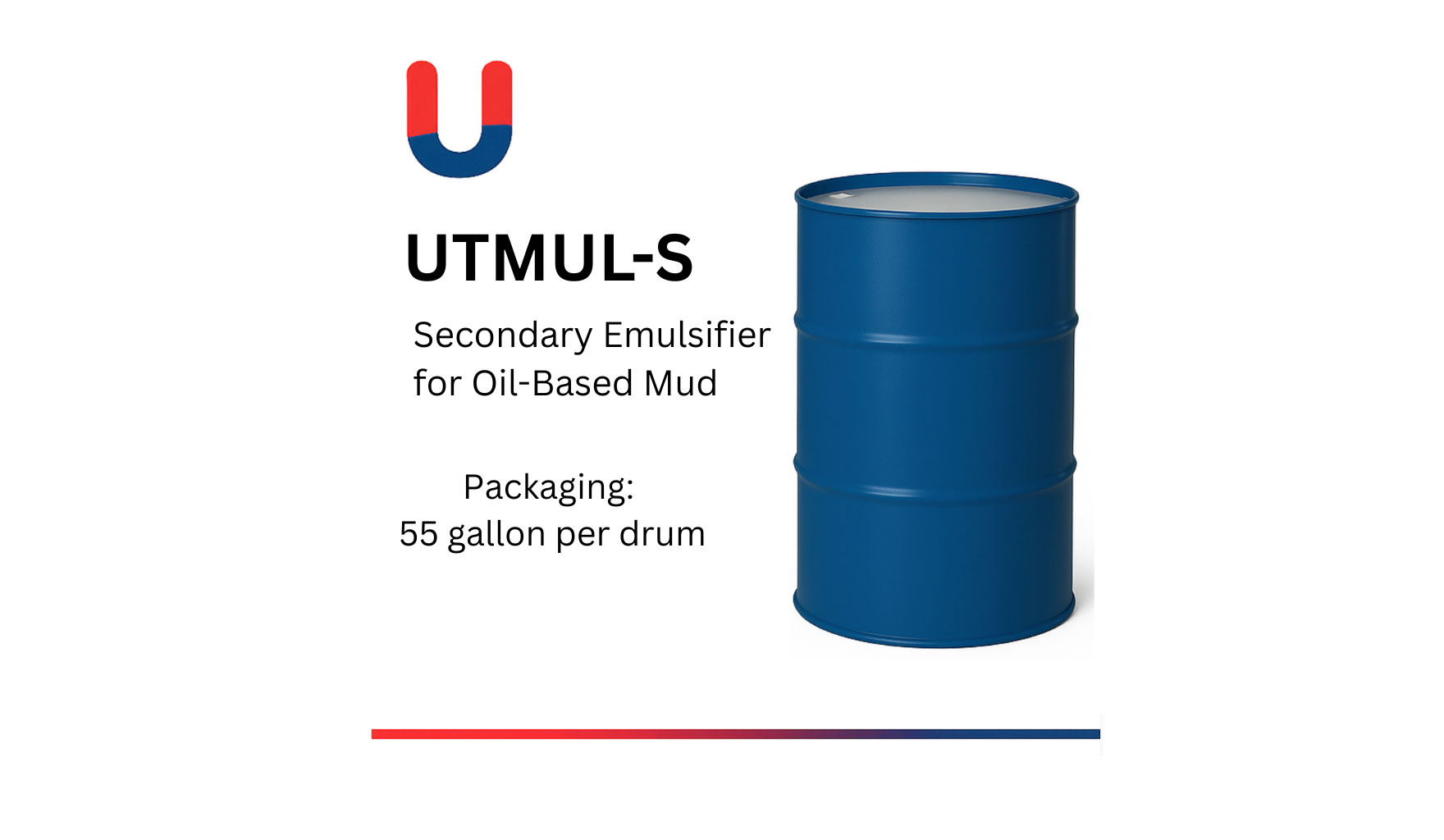
【Secondary Emulsifier for Oil-Based Mud】
One of the most common field mistakes is assuming every performance issue is caused by insufficient emulsifier concentration.
Before making adjustments, engineers should identify the underlying cause.
Symptom | Possible Causes |
Low ES | Emulsifier deficiency, contamination, salinity imbalance, oil-water ratio changes |
Water separation | Weak emulsion structure, inadequate primary emulsifier |
Poor oil-wetting | Insufficient secondary emulsifier, excessive solids |
Barite sag | Poor wetting, rheology problems, solids management issues |
High fluid loss | Multiple formulation-related factors |
Rheology instability | Contamination, solids loading, emulsifier imbalance |
Proper diagnosis prevents unnecessary chemical treatment and reduces operating costs.
Low ES
│
▼
Water Separation?
│
┌────Yes─────┐
▼ ▼
Increase No Water
Primary Separation
│
▼
Hot Roll ES Low?
│
┌──Yes────┐
▼ ▼
Increase Check
Secondary Contamination
│
▼
Check Oil-Water Ratio
Before making adjustments, evaluate:
· Electrical Stability (ES)
· Oil-water ratio
· Rheology
· HTHP fluid loss
· Solids content
· Internal phase salinity
A complete picture is required before treatment decisions are made.
Determine whether performance changes are caused by:
· Formation water
· Drill solids
· Cement contamination
· Acid gases
· Excessive low-gravity solids
In many cases, contamination—not emulsifier deficiency—is the true cause of declining performance.
Changes in internal phase composition may affect:
· ES
· Fluid stability
· Rheology
· Emulsion strength
Always verify system fundamentals before adjusting emulsifier concentrations.
Only after contamination and fluid composition have been reviewed should emulsifier adjustments be considered.
At this stage, determine whether:
· Primary emulsifier requires adjustment
· Secondary emulsifier requires adjustment
· Both components remain adequate
After treatment:
· Retest ES
· Evaluate rheology
· Assess fluid-loss performance
· Verify suspension stability
Never assume successful treatment without verification.
Additional primary emulsifier may be appropriate when:
Observation | Possible Interpretation |
Water separation | Weak emulsion structure |
Poor bottle-test performance | Insufficient emulsion formation |
Newly built system lacks stability | Low primary treatment |
Initial ES is consistently low | Potential primary deficiency |
Primary emulsifier adjustments are typically used to strengthen the basic emulsion framework.
Additional secondary emulsifier may be appropriate when:
Observation | Possible Interpretation |
ES declines after aging | Weak long-term stability |
Poor oil-wetting | Insufficient solids-wetting capability |
Thermal degradation observed | Limited thermal protection |
High contamination sensitivity | Inadequate emulsifier reserve |
Rheology becomes unstable after stress | Weak emulsion reinforcement |
Secondary emulsifiers are commonly used to optimize system durability rather than initial emulsion formation.
Balancing involves avoiding both under-treatment and over-treatment.
· Increased viscosity
· Higher treatment costs
· Limited additional ES improvement
· Reduced formulation efficiency
· Unnecessary chemical consumption
· Diminishing performance returns
· Potential rheological changes
· Increased operating costs
More chemical is not always the best solution.
· Stable emulsion formation
· Consistent ES
· Maintain balanced treatment levels
· Monitor routine fluid properties
· Thermal stability
· ES retention after aging
· Utilize thermally stable secondary emulsifiers
· Monitor hot-roll aging results
· Maintain adequate emulsifier reserve
· Contamination tolerance
· Emulsion resilience
· Maintain reserve emulsifier capacity
· Monitor contamination indicators closely
· Solids suspension
· Wetting performance
· Optimize secondary emulsifier performance
· Monitor sag tendency and rheology
· Emulsifier compatibility
· Long-term stability
· Validate treatment levels through laboratory testing
· Fine-tune secondary emulsifier performance
Successful balancing should be confirmed through laboratory testing rather than visual observations alone.
Recommended evaluations include:
Test | Purpose |
Electrical Stability (ES) | Emulsion strength |
Hot Roll Aging | Thermal stability |
HTHP Fluid Loss | Filtration control |
Rheology Analysis | Flow behavior |
Sag Testing | Suspension performance |
Contamination Testing | System robustness |
Verification ensures that treatment changes produce measurable performance improvements.
Base Fluid
↓
Prepare Formulation
↓
Measure ES
↓
Hot Roll Aging
↓
Contamination Test
↓
Adjust Primary
↓
Adjust Secondary
↓
Repeat Testing
↓
Field Trial
A drilling operation reported ES values dropping from 1,100 V to 650 V over several days.
The field team assumed additional primary emulsifier was required.
Further analysis revealed:
· Significant formation-water contamination
· Oil-water ratio changes
· Emulsifier concentrations remained adequate
· Removed contamination
· Restored proper oil-water ratio
· Optimized secondary emulsifier treatment
· ES recovered above 1,200 V
· Rheology stabilized
· Chemical consumption decreased
The case demonstrated the importance of diagnosis before treatment.
When evaluating an emulsifier package, consider asking:
Is the system validated under HTHP conditions?
What ES retention data is available after aging?
Has contamination tolerance been tested?
Which base oils are supported?
Can treatment recommendations be customized?
Is laboratory support available?
The quality of technical support often has a greater impact on field performance than the product itself.
Product | Function |
Build emulsion | |
Improve ES retention | |
Improve oil-wetting | |
Organophilic Clay | Rheology control |
Fluid Loss Additive | Reduce HTHP fluid loss |
· High-temperature performance
· Laboratory verified
· Compatible with diesel, mineral oil, and synthetic base fluids
· Technical formulation support
· OEM solutions available
No. Contamination, salinity imbalance, oil-water ratio changes, and thermal degradation can also reduce ES.
Not necessarily. Root-cause diagnosis should determine which component requires adjustment.
Yes. Secondary emulsifiers often improve ES retention and long-term emulsion stability.
Balance should be reviewed whenever significant changes occur in contamination levels, temperature exposure, rheology, or ES performance.
There is no universal ratio. Treatment levels depend on the formulation, drilling environment, base oil, and performance objectives.
Balancing primary and secondary emulsifiers is a process of system optimization rather than chemical addition.
A successful OBM formulation requires understanding how both emulsifiers contribute to emulsion performance, recognizing the root causes of fluid instability, and making data-driven adjustments based on actual operating conditions.
By following a structured diagnostic and optimization approach, drilling teams can achieve:
· Stable emulsion performance
· Higher ES retention
· Improved contamination tolerance
· Better thermal stability
· Reduced chemical consumption
· Lower drilling costs
The most effective emulsifier program is not the one with the highest treatment level, but the one that consistently delivers balanced performance throughout the drilling operation.
· Oil-Based Mud Emulsifiers: Ultimate Guide
· Primary vs Secondary Emulsifiers in Oil-Based Mud Systems
· What Causes Low Electrical Stability (ES) in Oil-Based Mud and How to Fix It
· Oil-Based Mud Troubleshooting Guide
If you are experiencing:
· Low ES
· Emulsion instability
· HTHP performance issues
· Contamination challenges
· Excessive chemical consumption
Our technical specialists can assist with:
· Emulsifier optimization
· Laboratory testing
· Formulation improvements
· Field performance evaluation