

The emulsifier system is the foundation of every successful oil-based mud (OBM) formulation. It directly influences emulsion stability, electrical stability (ES), rheology, fluid loss control, contamination tolerance, and overall drilling performance.
A poorly designed emulsifier package can lead to emulsion breakdown, water separation, low ES, excessive fluid loss, poor suspension properties, and instability under high-temperature conditions.
In contrast, a properly engineered emulsifier system helps maintain a stable water-in-oil emulsion throughout the drilling process, even in challenging environments such as high-temperature, high-pressure (HTHP) wells, extended-reach drilling, deepwater operations, and highly reactive shale formations.
This guide outlines the key principles, design considerations, and optimization strategies used when developing an emulsifier system for modern OBM applications.
An oil-based mud emulsifier system is not controlled by a single additive. It is a chemical balance where multiple components work together to maintain emulsion stability under changing drilling conditions.
A typical OBM emulsifier system consists of:
Primary Emulsifier
↓
Creates Water-in-Oil Structure
Secondary Emulsifier
↓
Strengthens Emulsion Film
Wetting Agent
↓
Maintains Oil-Wetting of Solids
Lime
↓
Activates Emulsifier Chemistry
CaCl₂ Brine
↓
Controls Internal Phase Stability
Each component affects different aspects of drilling fluid performance, and changing one component may influence the entire system balance.
An emulsifier system is a combination of chemicals used to create and maintain a stable water-in-oil emulsion within an oil-based drilling fluid.
Rather than relying on a single product, modern OBM formulations typically utilize multiple components working together to achieve long-term stability.
A complete emulsifier system generally includes:
· Primary emulsifier
· Secondary emulsifier
· Wetting agent
· Lime (alkalinity source)
· Internal phase salinity control (typically CaCl₂)
Each component contributes to overall system performance and must be selected as part of an integrated formulation rather than individually.
Before selecting products or determining treatment levels, engineers should first define the operational objectives of the drilling fluid.
A well-designed emulsifier system should provide:
Preventing water separation and maintaining uniform droplet dispersion throughout drilling operations.
Supporting strong emulsion integrity and contamination resistance.
Reducing filtrate invasion and minimizing formation damage.
Maintaining performance under elevated bottom-hole temperatures.
Resisting destabilization caused by formation water, drill solids, cement, and other contaminants.
Supporting suspension, cuttings transport, and barite suspension without excessive viscosity.
The optimal design is not necessarily the one with the highest ES value, but the one that delivers balanced performance across all critical fluid properties.
Parameter | Why It Matters | Design Consideration |
Oil-Water Ratio | Determines emulsion strength | Higher water phase requires stronger emulsifier support |
Base Oil Type | Influences chemical compatibility | Diesel, mineral oil, synthetic oil require evaluation |
Temperature | Accelerates chemical degradation | High-temperature emulsifier chemistry required |
Density | Increases solids loading | Strong wetting and suspension needed |
Contamination Risk | Challenges emulsion stability | Higher emulsifier reserve may be required |
Drilling Duration | Affects long-term stability | Focus on aging performance |
The primary emulsifier forms the basic water-in-oil emulsion structure.
Its primary functions include:
· Creating stable water droplets
· Establishing emulsion integrity
· Supporting initial ES development
· Providing fluid stability
Insufficient primary emulsifier often results in poor emulsion quality and visible water separation.
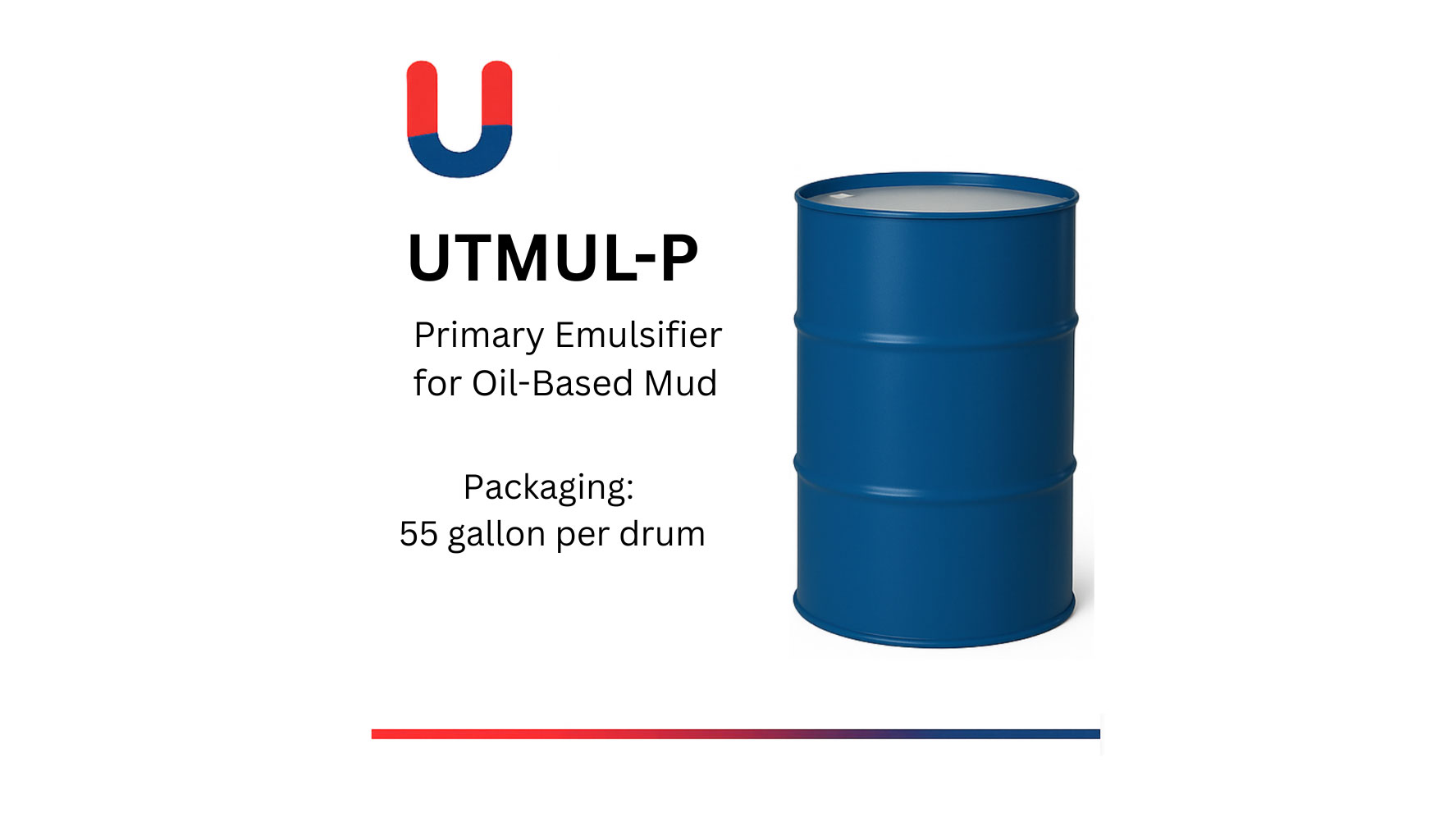
The secondary emulsifier reinforces the emulsion formed by the primary emulsifier.
Key functions include:
· Increasing ES
· Improving contamination tolerance
· Enhancing thermal stability
· Strengthening emulsion film integrity
In many drilling environments, secondary emulsifiers play a significant role in maintaining long-term emulsion performance.
For a detailed comparison, see:
Primary vs Secondary Emulsifiers in Oil-Based Mud Systems
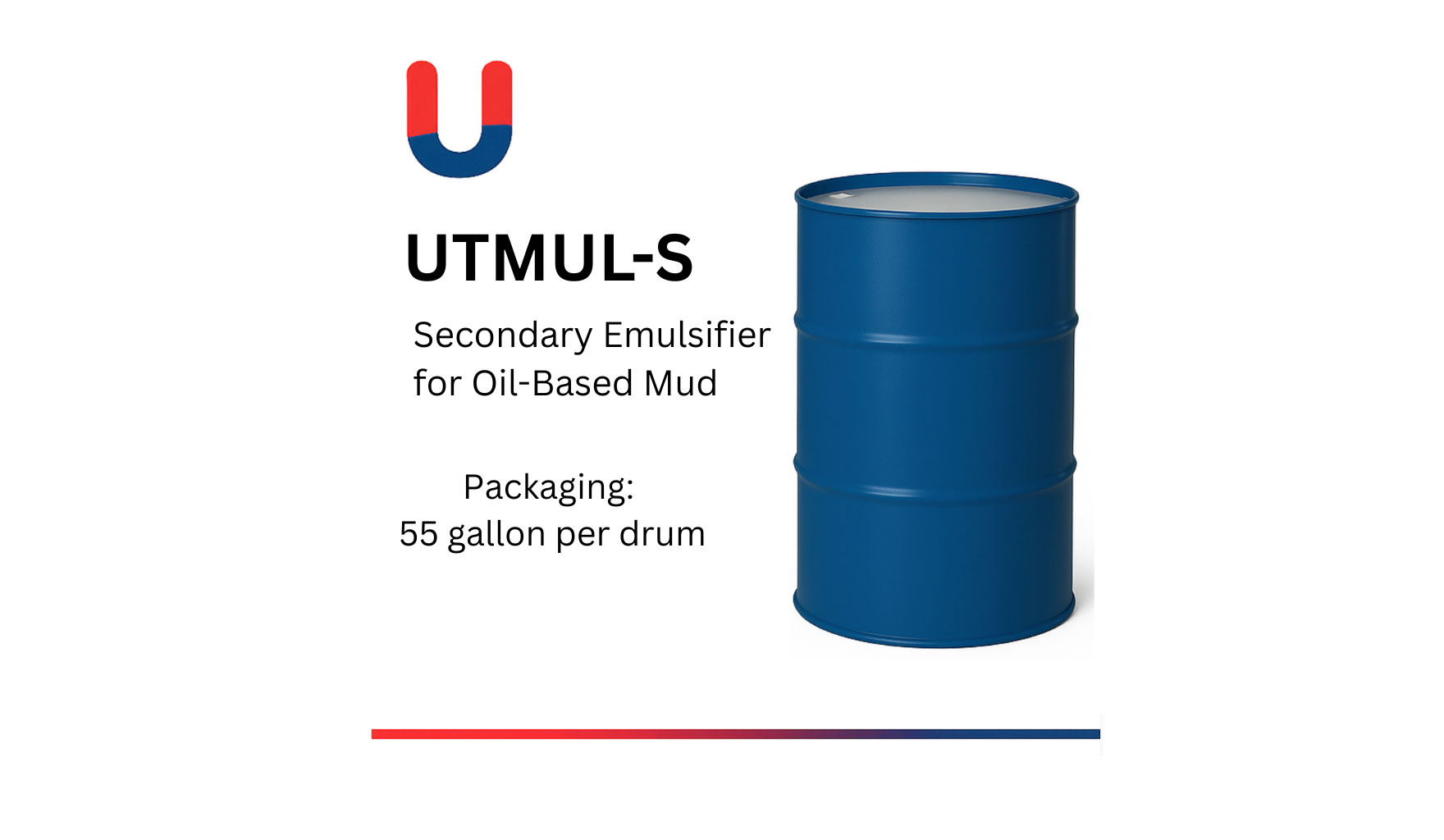
Wetting agents ensure that weighting materials and drilled solids remain oil-wet rather than water-wet.
Benefits include:
· Improved solids dispersion
· Reduced sag tendency
· Better rheology control
· Improved fluid stability
Lime supports emulsifier performance by maintaining appropriate alkalinity levels within the drilling fluid.
Insufficient lime can negatively impact emulsifier efficiency and emulsion stability.
Calcium chloride is commonly used to maintain the internal water phase.
Proper salinity contributes to:
· Stronger emulsion films
· Higher ES retention
· Better stability under temperature stress
Every emulsifier system should be designed around the specific drilling environment.
Key parameters include:
Design Parameter | Impact on Emulsifier Selection |
Bottom-hole temperature | Thermal stability requirements |
Mud density | Solids loading and wetting demand |
Well trajectory | Suspension requirements |
Water phase volume | Emulsion strength requirements |
Contamination risk | Emulsifier reserve requirements |
Drilling interval length | Long-term stability requirements |
The more severe the drilling conditions, the more robust the emulsifier package must be.
The base oil significantly affects emulsifier behavior.
Common OBM base fluids include:
Advantages:
· Strong solvency
· Good emulsifier compatibility
Considerations:
· Environmental restrictions in some regions
Advantages:
· Lower toxicity
· Widely accepted
Considerations:
· Different polarity characteristics may influence emulsifier selection
Advantages:
· Excellent environmental profile
· Superior low-temperature performance
Considerations:
· Requires compatibility verification during formulation development
Different base oils may require different emulsifier chemistries and treatment levels.
Selection should consider:
· Base oil compatibility
· Temperature resistance
· Water phase requirements
· Desired ES performance
A primary emulsifier should provide sufficient emulsion structure under both laboratory and field conditions.
Secondary emulsifier selection should focus on:
· ES enhancement
· Contamination tolerance
· High-temperature stability
· Long-term emulsion integrity
Rather than maximizing dosage, engineers should determine the minimum effective treatment level that delivers stable performance.
The internal phase should be designed according to:
· Required inhibition level
· Formation characteristics
· Thermal environment
· Water activity requirements
Critical factors include:
· Oil-water ratio
· Calcium chloride concentration
· Internal phase volume
Incorrect water phase design can undermine an otherwise effective emulsifier system.
No emulsifier system should be deployed without laboratory evaluation.
Recommended testing includes:
Test | Purpose |
Electrical Stability (ES) | Emulsion strength |
Hot Rolling Aging | Thermal stability |
HTHP Fluid Loss | Filtration performance |
Rheology | Flow behavior |
Sag Evaluation | Suspension stability |
Contamination Testing | System robustness |
Laboratory verification helps identify weaknesses before field implementation.
· Thermal stability
· ES retention
· Fluid loss control
· High-temperature emulsifier chemistry
· Enhanced secondary emulsifier support
· Extensive aging evaluation
· Inhibition performance
· Water activity control
· Optimized salinity
· Stable internal phase design
· Strong emulsion integrity
· Suspension stability
· Sag prevention
· Balanced rheology
· Effective wetting system
· Enhanced solids management
· Low-temperature stability
· Emulsion consistency
· Base oil compatibility evaluation
· Cold-temperature performance testing
This often results in poor long-term stability and reduced contamination tolerance.
A system that performs well initially may fail after contamination or temperature exposure.
Long-term stability is more important than short-term ES values.
Not all emulsifiers perform equally in every base oil system.
Compatibility testing is essential.
Excessive treatment may:
· Increase costs
· Affect rheology
· Create formulation imbalance
Field failures frequently occur when formulations are deployed without proper testing.
A drilling contractor experienced recurring ES decline and increasing fluid loss while drilling a high-temperature well with bottom-hole temperatures approaching 170°C.
· ES dropped below 600 V after aging
· Fluid loss increased significantly
· Emulsion stability deteriorated
· Upgraded to a high-temperature primary emulsifier
· Increased secondary emulsifier reserve
· Optimized internal phase salinity
· Conducted additional hot-roll aging validation
· ES remained above 1,200 V after aging
· Fluid loss improved significantly
· Stable rheology maintained throughout the drilling interval
The project demonstrated the importance of designing for actual operating conditions rather than laboratory baseline performance alone.

Secondary emulsifiers strengthen the emulsion, improve ES, and increase contamination tolerance.
Treatment levels vary depending on base oil, temperature, water phase volume, contamination risk, and operational objectives. Laboratory testing should determine final concentrations.
No. Emulsifier performance depends on the entire formulation and drilling environment.
Higher temperatures accelerate chemical degradation and typically require more thermally stable emulsifier chemistries.
Performance is commonly evaluated through ES testing, hot-roll aging, fluid-loss testing, rheology analysis, and contamination tolerance assessments.
An effective OBM emulsifier system is not simply a combination of chemicals—it is an engineered solution designed around specific well conditions and performance objectives.
Successful emulsifier system design requires balancing:
· Primary emulsifier performance
· Secondary emulsifier support
· Base oil compatibility
· Internal phase chemistry
· Temperature resistance
· Contamination tolerance
By following a structured design process and validating formulations through laboratory testing, drilling teams can achieve reliable emulsion stability, improved ES retention, reduced fluid loss, and consistent performance throughout the drilling operation.
· Oil-Based Mud Emulsifiers: Ultimate Guide
· Primary vs Secondary Emulsifiers in Oil-Based Mud Systems
· How to Balance Primary and Secondary Emulsifiers in OBM
· What Causes Low Electrical Stability (ES) in Oil-Based Mud and How to Fix It
· Oil-Based Mud Troubleshooting Guide
If you are facing challenges related to:
· Low ES
· Emulsion instability
· High-temperature drilling
· Contamination tolerance
· Fluid-loss control
Our technical team can assist with:
· Emulsifier system design
· Laboratory evaluation
· Product selection
· Field optimization support