

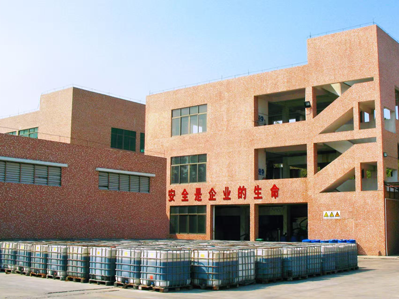
Oil-based drilling fluids (OBM) are widely used in deep, high-temperature wells because of their superior thermal stability, shale inhibition, lubricity, and wellbore stability. However, when drilling in extreme High-Temperature High-Pressure (HTHP) environments—especially above 300°F (150°C)—traditional oil-based mud systems may lose stability, resulting in emulsion breakdown, fluid separation, excessive filtrate loss, and increased rheological issues.
This is where primary emulsifiers play an essential role. These specialized oilfield chemicals are designed to enhance the stability, performance, and resilience of oil-based muds (OBM), especially under harsh downhole conditions.
In this article, we explore how primary emulsifiers work, how they improve Oil-based drilling fluid performance at 300°F (150°C), their impact on filtration, rheology, and wellbore stability, and key selection criteria for drilling fluid formulation engineers.
Primary emulsifiers are surface-active chemicals that stabilize the water-in-oil emulsion structure in oil-based drilling fluids. Their main function is to ensure that water droplets are perfectly dispersed and stabilized inside the oil phase, preventing phase separation even under high temperature and pressure.
These emulsifiers are typically fatty acid compounds, imidazolines, or amides, which have dual affinity for oil and water molecules, allowing them to form stable interfacial films around water droplets.
In a typical Oil-based drilling fluid system, primary emulsifiers often work together with secondary emulsifiers and wetting agents to maintain stability, lower filtration rates, and reduce emulsion electrical stability fluctuations.
At temperatures above 300°F (150°C), drilling fluids face severe challenges:
High Temperature Effect | Impact on Oil-Based Mud |
Emulsifier degradation | Emulsion breakdown |
Droplet coalescence | Phase separation and instability |
Thinning of interfacial film | Increased filtrate loss |
Rheological instability | Poor suspension of cuttings |
Increased corrosion and contamination | Reduced drilling efficiency |
At such extreme temperature conditions, drilling fluids must maintain:
Strong emulsification
Thermal stability
Low High-Temperature High-Pressure filtrate loss
Stable rheology and suspension properties
Only high-performance primary emulsifiers designed for High-Temperature High-Pressure applications can effectively maintain these properties.
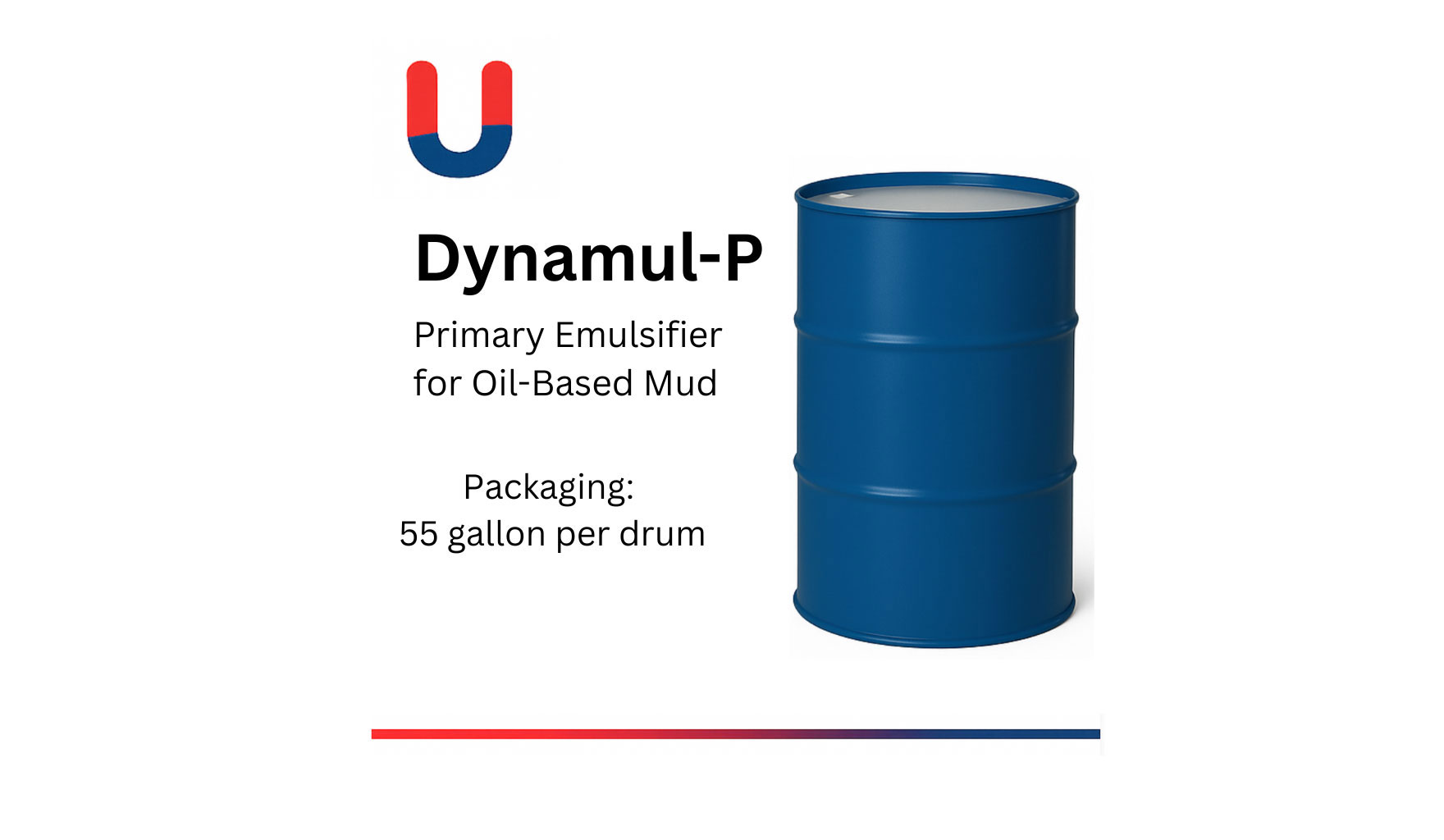 【Dynamul-P,Primary Emulsifier for Oil-Based Mud】
At high temperatures, traditional emulsifiers lose strength, and the interfacial film between oil and water weakens, leading to coalescence and emulsion breakdown.
Primary emulsifiers designed for 300°F(150°C)+ conditions produce a strong, elastic film around internal water droplets, preventing their merging—even under extreme pressure and temperature. This ensures:
Excellent emulsion stability
Longer fluid life
Prevention of phase separation
A major benefit of primary emulsifiers is their ability to minimize fluid invasion and filtrate loss into permeable formations.
At 300°F(150°C), poorly designed Oil-based drilling fluid systems tend to lose control of filtrate, leading to differential sticking, formation damage, and costly instability issues.
Primary emulsifiers help form:
Thin,
Tight,
Low-permeability mud cakes,
which reduce fluid penetration and protect formation permeability.
Maintaining proper rheological properties at 300°F(150°C) is crucial for cuttings suspension, hole cleaning, and ECD control.
Primary emulsifiers help stabilize these properties by improving:
Rheological Property | Effect of High-Performance Emulsifiers |
Plastic Viscosity (PV) | More stable under temperature impact |
Yield Point (YP) | Prevents drastic reduction at high T |
Gel Strength | Maintains suspension capability |
Sag Resistance | Reduces barite sag incidents |
Lubricity | Reduces torque and drag in directional wells |
This is essential for long horizontal drilling applications and deepwater wells.
Directional drilling and complex wellbore trajectories involve higher torque, friction, and extended contact between drill string and casing. Oil-based systems inherently offer better lubricity, but primary emulsifiers further enhance wetting and reduce torque, improving:
Torque reduction
Lower drag and friction
Reduced bit wear
Smoother weight transfer and extended reach
This makes primary emulsifiers ideal for long-reach horizontal wells, shale plays, and high-angle directional drilling environments.
Electrical Stability (ES) is one of the key indicators of emulsion quality and system integrity. At high temperatures, if electrical stability decreases significantly, the system is at risk of breaking down.
Primary emulsifiers enhance ES values by strengthening interfacial films and maintaining strong emulsion integrity. A high ES value at 300°F(150°C) indicates:
Thermal endurance
Fluid consistency
Better resistance to contaminants and water influx
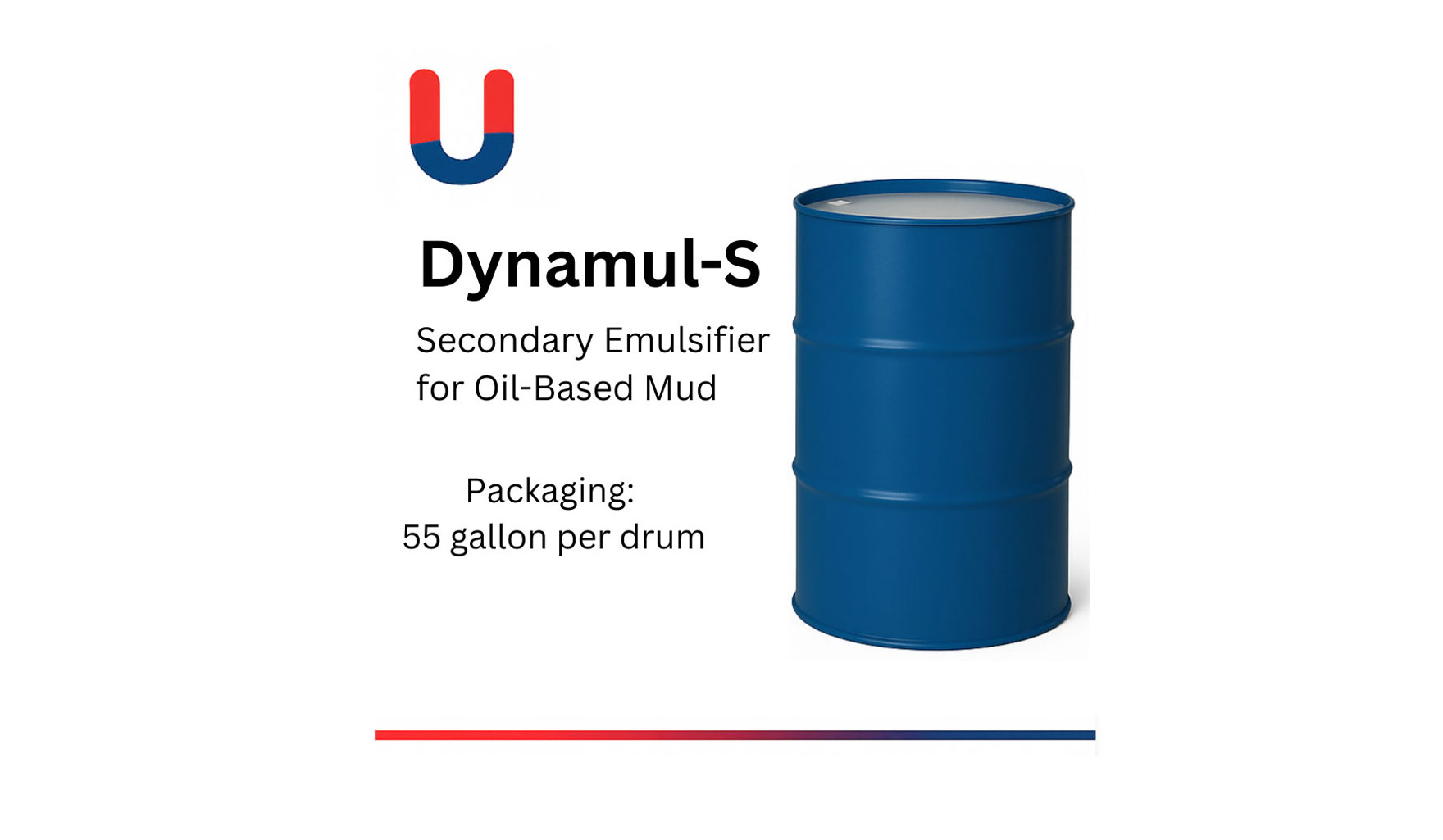 【Dynamul-S,Secondary Emulsifier for Oil-Based Mud】
When designing oil-based mud systems for deep high-temperature, high-pressure or offshore wells, consider the following selection criteria:
Selection Factor | Key Requirement |
Temperature resistance | Must tolerate 300°F (150°C) and above |
Emulsion stability | High ES values even under contamination |
Compatibility | Work with lime, wetting agents, and secondary emulsifiers |
Low High-Temperature High-Pressure filtrate | Thin filter cake and minimal fluid loss |
Oil–wetting capability | Strong wetting agent compatibility |
Environmental compliance | Non-toxic and low environmental impact |
Advanced emulsifiers often use synthetic-based or nano-enhanced surfactants for higher film strength and thermal endurance.
Primary emulsifiers are indispensable for maintaining the performance, stability, and reliability of oil-based drilling muds, especially in high-temperature (300°F+)(150°C+) environments. They significantly improve:
Emulsion stability under thermal stress
Rheological properties and suspension capability
Lubricity for horizontal and directional drilling
High-Temperature High-Pressure filtrate control and formation protection
Overall drilling efficiency and mud life
In deep, complex, and high-pressure drilling operations, selecting the right emulsifying system can determine success or failure. High-quality primary emulsifiers ensure superior wellbore stability, operational safety, and cost efficiency.
Unitech Chemicals USA LLC, headquartered in Texas, is a trusted drilling fluid additives supplier in the USA, providing high-performance chemical solutions for oil-based and water-based drilling systems. With advanced manufacturing, strong R&D capabilities, and global distribution support, Unitech specializes in:
Primary and secondary emulsifiers
Lubricants and wetting agents
High-temperature filtration control additives
Shale inhibitors and viscosifiers
High-Temperature High-Pressure drilling fluid additive packages and custom formulations
Supported by its parent company Unitech Chemicals Kaiping Ltd. (China), Unitech Chemicals offers both technical support and local warehouse stocking to drilling companies and mud service providers across North America.
Whether your operation requires High-Temperature High-Pressure emulsifiers for 300°F (150°C) wells, synthetic Oil-based drilling fluid systems, or eco-friendly drilling additives, Unitech Chemicals delivers reliable, cost-effective, and performance-driven solutions that ensure success in demanding drilling environments.